
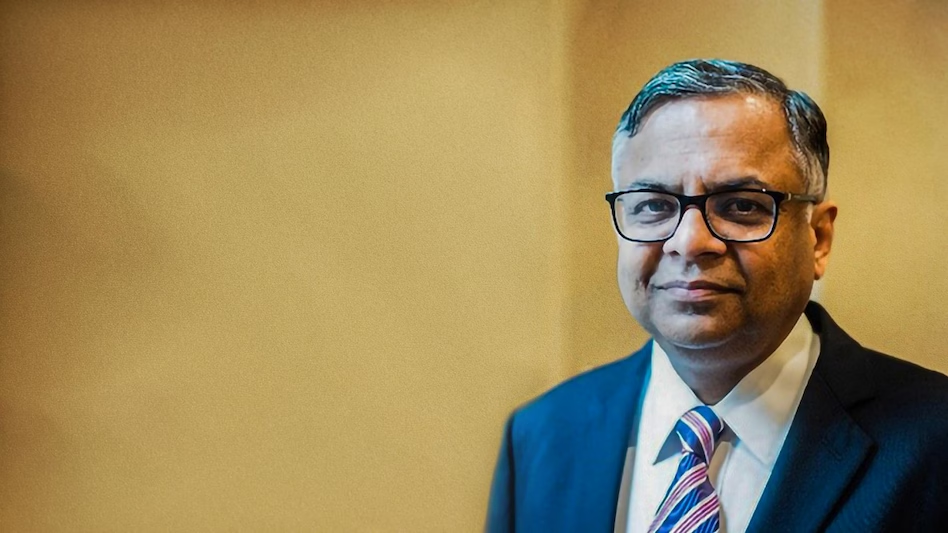
Tata’s N Chandrasekaran Shuts Down ‘Silent Partner’ Claim: “Air India CEO Was Not a Singapore Airlines Nominee”

Tata Chairman Responds Strongly to ‘Silent Partner’ Allegations
Tata Sons Chairman N Chandrasekaran has firmly denied claims that Singapore Airlines had any role in appointing the CEO of Air India, calling such suggestions completely unfounded. The statement was made in response to recent remarks by Praful Patel, who alleged that Singapore Airlines was acting as a “silent partner” in Air India through its influence on leadership decisions.
Clarification: Air India CEO Was Hired Directly by Tata
Chandrasekaran clarified that Air India CEO Campbell Wilson was personally hired by him—not nominated or installed by Singapore Airlines.
“In fact, when he was hired by me, he had to quit Singapore Airlines and join Air India as an employee,” Chandrasekaran stated.
“At that time, Singapore Airlines did not have a stake. We owned 100% of Air India.”
This timeline is crucial, as it confirms that the CEO’s appointment predated any financial or strategic involvement by Singapore Airlines.
Singapore Airlines Stake Came After the Vistara Merger
Chandrasekaran also highlighted a key fact: Singapore Airlines only acquired a 25% stake in Air India after the merger with Vistara. Prior to that, Tata Sons was the sole owner of the airline.
This rebuts Praful Patel’s assertion that Singapore Airlines was a behind-the-scenes power player during the early stages of Air India’s transformation under Tata ownership.
Background: The Vistara-Air India Merger
The merger of Vistara (a joint venture between Tata Sons and Singapore Airlines) with Air India was announced in 2022 as part of Tata’s ambitious plan to consolidate its aviation ventures and streamline operations. Under the terms of the deal, Singapore Airlines took a 25% stake in the merged entity, while Tata Sons retained a 75% majority.
However, Campbell Wilson’s appointment as CEO came before this merger was finalized, strengthening Chandrasekaran’s case that there was no influence from Singapore Airlines at the time.
Why This Matters
The integrity of Air India’s revival is closely watched in India and abroad. Allegations of foreign influence—especially from a strategic player like Singapore Airlines—could undermine public trust and invite regulatory scrutiny. By decisively addressing the controversy, Chandrasekaran has sought to restore confidence in Tata’s independent leadership of Air India.
Tata Stands Firm on Transparent Leadership
Chandrasekaran’s comments make one thing clear: Air India’s CEO was not chosen under external pressure. The leadership transition was an internal Tata decision, and any partnership with Singapore Airlines only began after Air India’s course had already been charted.

