TalkMed to Be Privatized at 45.6 Cents per Share: What Does This Mean for Investors

TalkMed Gets Privatization Offer: What You Need to Know
In a significant move in Singapore’s healthcare sector, TalkMed Group, a well-known local cancer specialist, has received a privatization offer from Tamarind Health, a healthcare provider with operations across Asia. This deal is part of a larger trend in Singapore, where more and more publicly listed companies are being privatized and delisted from the Singapore Exchange (SGX).
But what does this mean for TalkMed shareholders, and why is this happening at a time when many companies are choosing to leave the stock market? Let’s break it down.
The Privatization Deal: How Much Is TalkMed Worth?
Tamarind Health’s offer is to acquire TalkMed shares at a price of 45.6 cents per share. This is a premium over TalkMed’s share price before the company revealed it had received an acquisition offer.
On April 5, before the announcement, TalkMed’s stock was trading at around 46 cents per share. As of December 23, shares were still trading around that price, showing that investors are paying attention to the deal.
TalkMed’s founding doctors, who collectively hold 83.06% of the company, have already agreed to sell their shares in the transaction. This means the deal is moving forward with strong backing from the company’s leadership.
Who Is Behind the Offer? Tamarind Health and 65 Equity Partners
The deal is being executed through Tamarind Health’s special purpose vehicle, TW Troy, which is the entity making the buyout offer.
Interestingly, the deal also includes an investment from 65 Equity Partners, a company backed by Temasek, one of Singapore’s most powerful investment firms. 65 Equity Partners will invest in Tamarind Health as part of the deal, providing crucial support for the company’s expansion plans.
After the transaction, 65 Equity Partners will hold 18.3% of Tamarind Health’s voting interest, while the founding doctors of TalkMed will retain 31.3% of the company’s ownership.
This partnership could also hint at the possibility of a future SGX listing, which could give the combined entity the opportunity to return to the public markets down the road.
Why Privatization? The Bigger Trend in Singapore
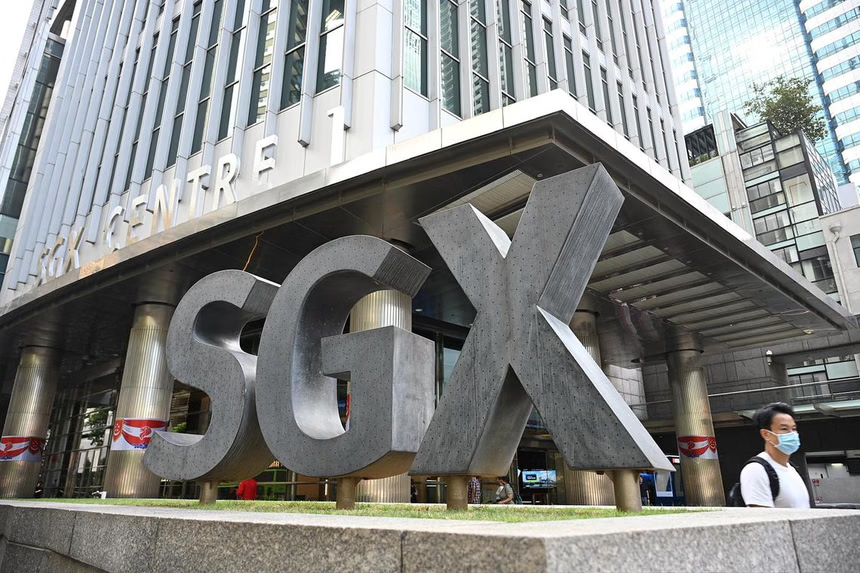
This move comes at a time when privatization is becoming more common in Singapore. According to data from PricewaterhouseCoopers (PwC), 20 publicly traded companies in Singapore have been privatized and delisted as of November 2024. This represents a significant trend where companies are opting to leave the public markets.
In contrast, only four companies have listed on the Singapore Exchange in 2024, raising relatively small amounts. This has been the worst performance for SGX since PwC started tracking this data back in 2011.
So why is this happening?
Why Are So Many Companies Leaving the SGX?
Several factors are at play when it comes to the rise in privatizations and delistings:
- Low Valuations – Many companies, particularly small- to mid-cap firms, are facing low stock valuations on the SGX, making them vulnerable to takeover offers or more attractive for privatization.
- Poor Trading Liquidity – Some companies struggle with low trading volumes, making it harder for investors to buy and sell shares. This can lead to frustrations with being a publicly listed company.
- High Costs of Listing – Being listed on the SGX involves high costs for companies, including compliance costs and regulatory obligations. These costs can become a burden, especially for smaller companies that are not attracting enough investor interest.
- More Attractive Comparisons – As Maybank Research analyst Eric Ong points out, valuations on the SGX may seem unattractive compared to similar companies listed on other exchanges. Companies are opting to delist, finding it easier to operate privately and focus on growth without the pressures of the public market.
What Does the Offer Mean for TalkMed Investors?
For TalkMed’s investors, the offer from Tamarind Health represents a premium price for their shares. If the deal goes through, investors will receive 45.6 cents per share, which is slightly above the market price before the offer was made.
For some shareholders, this might be a good opportunity to cash out at a favorable price. However, there’s also the question of whether the privatization deal is the best move for the long-term future of the company.
If TalkMed does go private, it will no longer have the pressure of quarterly earnings reports and shareholder expectations, which could allow the company to focus more on expansion and growth. On the flip side, it also means that shareholders will lose the ability to trade their shares on the open market.
A Look at Tamarind Health and TalkMed’s Future
Tamarind Health is an interesting player in this deal, with operations spanning several Asian countries. The company operates a network of healthcare facilities, including:
- OncoCare, Solis, Luma, CanCare, and Novena Heart Centre in Singapore.
- Icon Cancer Centre in Hong Kong.
- OncoCare and Can-Care in Malaysia.
- Central Luzon Integrated Oncology Centre in the Philippines.
TalkMed currently operates nine medical centres across three Parkway-operated hospitals in Singapore: Mount Elizabeth Orchard, Mount Elizabeth Novena, and Gleneagles.
Tamarind’s strategic investment in TalkMed is aimed at expanding the company’s regional presence and positioning itself as a key player in high-quality cancer treatment across Asia. The deal could provide TalkMed with the resources it needs to attract more regional patients seeking top-tier healthcare services.
What’s Next for Shareholders?
Now that the offer has been made, TalkMed’s shareholders will have a chance to vote on the deal. If the offer is approved, TalkMed will become a privately held entity, and its shares will be delisted from the SGX.
For shareholders, this could be an opportunity to sell shares at a premium before the company goes private. However, the timing and specifics of the deal will depend on how the vote and further negotiations play out.
Final Thoughts: The Future of TalkMed
TalkMed’s privatization deal highlights the growing trend of privatizations in Singapore and the challenges that small and mid-sized companies face on the public markets. The deal could be a win-win for both TalkMed and Tamarind Health, positioning the company for future growth in the regional healthcare market.
For investors, the next step is to wait and see how the shareholder vote unfolds. Should the deal go through, it will be a significant shift for TalkMed, but one that could allow it to expand more freely without the pressures of the stock market.