F&N CEO on Orange Juice Crisis: ‘We Never Expected to Become Farmers’ – How Climate Change is Shaking Up the Beverage Industry

F&N CEO Faces Orange Juice Supply Crisis Amid Hurricanes
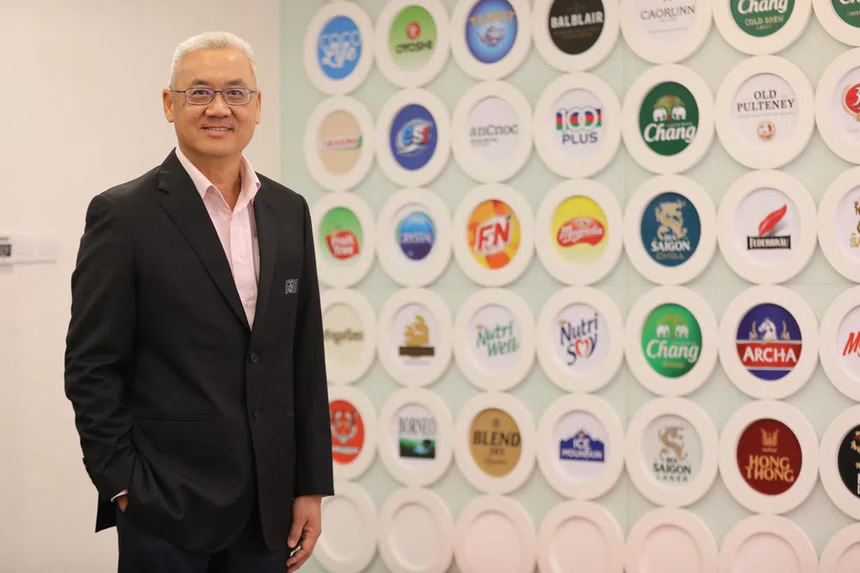
In a surprising turn of events, F&N (Fraser and Neave), one of Southeast Asia’s leading beverage manufacturers, is grappling with a severe shortage of one of its core ingredients – orange juice. The company’s CEO, Hui Choon Kit, recently shared his thoughts on how climate change and natural disasters have forced F&N to rethink its supply chains and adapt to new challenges.
The issue is not just a simple supply problem; it’s a consequence of extreme weather events that have devastated citrus farms in Florida, one of the world’s largest citrus-producing regions.
Hurricanes Wreak Havoc on Florida’s Citrus Farms
Between September and October 2024, two hurricanes—Hurricane Helene and Hurricane Milton—swept through the southeastern coast of the United States. Florida’s citrus industry, which supplies a significant portion of the world’s orange juice, took a massive hit.
F&N’s CEO, Hui Choon Kit, explains that Florida’s citrus farms are facing their lowest crop yields in nearly 100 years. This natural disaster has worsened an already tight supply of oranges, which has been steadily declining in recent years due to climate change and other environmental factors.
F&N’s Struggle with Rising Costs and Supply Chain Woes
For F&N, the situation is far from simple. The company has always relied heavily on Florida oranges for its iconic beverages, including orange juice. But now, with crop yields plummeting, the cost of oranges has shot up dramatically. The result? Higher prices for consumers.
“We have no choice but to pass these rising costs onto our customers,” Hui Choon Kit admits. As F&N faces rising prices for raw materials, they must find ways to stay competitive while maintaining quality. This has prompted the company to explore alternative sourcing options—but the search is not as easy as it sounds.
Adapting to Climate Change: F&N’s Strategic Shift
For F&N, this ongoing crisis has forced them to think more creatively about how they manage their raw material supply chains. As climate change accelerates the frequency of extreme weather events, F&N has been adjusting its strategy to ensure the long-term sustainability of its products.
For the past few years, F&N’s leadership has focused on securing local sources of raw materials to protect the company from external shocks. With the COVID-19 pandemic causing disruptions across global supply chains and hurricanes and other weather-related events wreaking havoc on farming communities, relying on international supply chains has become increasingly risky.
The Rise of Local Sourcing: A Long-Term Strategy for F&N
As a result, F&N is now prioritizing local sourcing of ingredients wherever possible. In a market where extreme weather is the new normal, F&N’s approach to risk management is evolving. By building more resilient supply chains and investing in local agriculture, the company hopes to mitigate the risks posed by climate change.
“The disruptions we’ve seen during the pandemic were eye-opening. Now, with extreme weather becoming more frequent, we are committed to finding sustainable solutions closer to home,” says Hui. Local sourcing offers multiple benefits—reduced transportation costs, a more reliable supply, and, importantly, lower exposure to global weather risks.
What Does This Mean for F&N’s Consumers?
As F&N struggles with the rising costs of raw materials, consumers can expect higher prices for some of their favorite beverages. The increased cost of orange juice, in particular, is likely to be passed on to customers. But F&N’s CEO remains committed to maintaining quality and ensuring that the company can weather the storm, both literally and figuratively.
For customers, this might mean paying a little more for that morning glass of orange juice, but it also highlights the ongoing impact of climate change on the global food and beverage supply chain. As extreme weather events become more frequent, businesses like F&N are facing hard choices about how to stay afloat while managing their environmental footprint.
A New Era of Beverage Production: Rethinking the Supply Chain
F&N’s challenges serve as a reminder that climate change is not just an environmental issue—it’s an economic one as well. Hui Choon Kit’s comments underscore how even large, established companies must adapt quickly to survive in a world where weather events can shake entire industries. The question is: How can beverage manufacturers, and other industries, prepare for the next big crisis?
F&N is not alone in its struggles. As climate risks escalate, many companies are rethinking their supply chains and considering new ways to reduce their vulnerability to the changing climate. For many, sustainability is no longer a choice—it’s a necessity.
What’s Next for F&N and the Global Beverage Industry?
Looking ahead, F&N will continue to focus on finding alternative sources of orange juice and other raw materials. Local sourcing could become a critical component of the company’s strategy as it seeks to reduce reliance on vulnerable regions like Florida. This shift could open new opportunities for suppliers in Asia and other regions, where weather events have so far been less severe.
But beyond the immediate supply chain challenges, the broader question remains: How will global companies like F&N navigate the growing threat of climate change to ensure they can keep up with consumer demand without sacrificing product quality?
Final Thoughts: The Big Picture
F&N’s CEO, Hui Choon Kit, never imagined that his company would be facing a situation where it might need to source locally or even become farmers to protect its future. But with climate change and its accompanying weather events disrupting global agriculture, companies everywhere must find creative solutions.
F&N’s pivot to local sourcing and its search for sustainable alternatives reflect a broader trend in the food and beverage industry, where adapting to climate change is no longer just an environmental concern but a business necessity. In the end, it’s all about finding a balance between supply chain resilience, cost control, and meeting consumer demand.