Singapore at the Heart of India’s Act East Policy: External Affairs Minister Jaishankar’s Strategic Visit

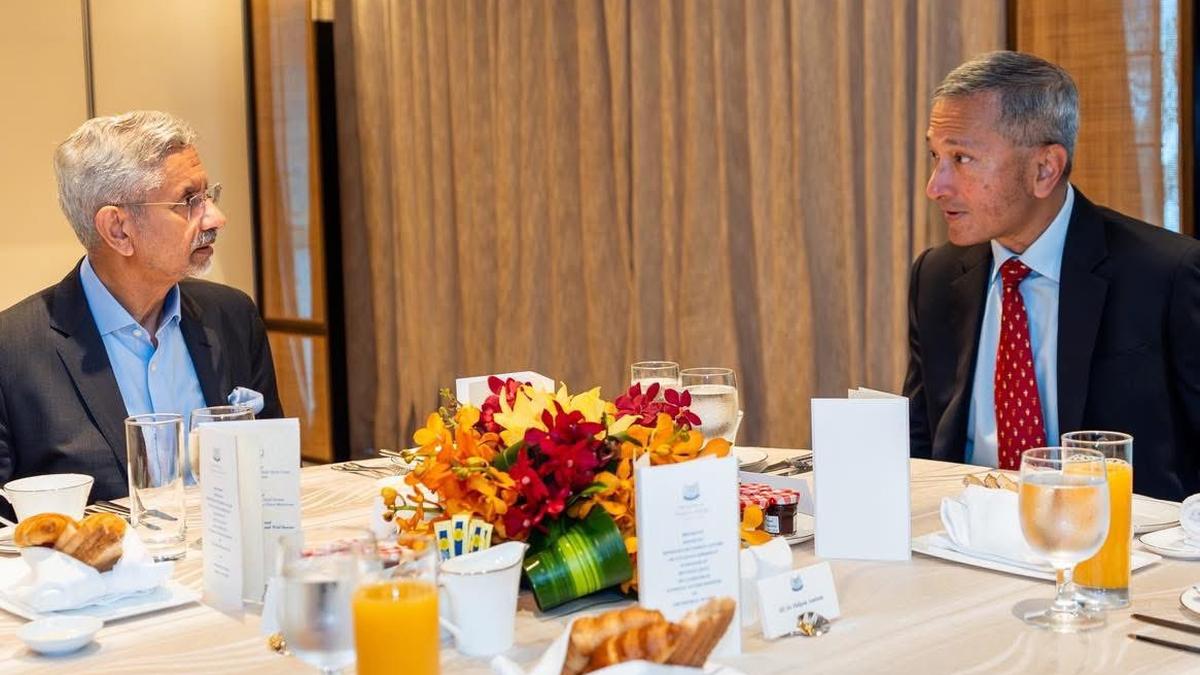
In a significant diplomatic move, India’s External Affairs Minister S. Jaishankar visited Singapore on July 13, 2025, as part of a two-nation tour that also includes China. The visit marks a critical juncture in India-Singapore relations and underscores Singapore’s pivotal role in India’s Act East Policy. During his time in Singapore, Jaishankar held high-level talks with President Tharman Shanmugaratnam, Deputy Prime Minister Gan Kim Yong, and Foreign Minister Vivian Balakrishnan. The discussions centered on deepening bilateral cooperation and enhancing regional security, economic partnerships, and strategic alignments in the rapidly evolving Indo-Pacific geopolitical landscape.
Singapore’s Central Role in India’s Act East Policy
India’s Act East Policy, introduced over a decade ago, seeks to strengthen India’s engagement with Southeast Asia and the wider Asia-Pacific region, focusing on economic integration, cultural exchanges, and strategic cooperation. Singapore, often described as a global financial hub and a linchpin of regional connectivity, has emerged as a cornerstone of this policy.
During the meetings, Jaishankar emphasized that Singapore’s strategic location, economic prowess, and political stability make it a natural partner for India’s ambitions in the region. Singapore’s openness to trade, robust legal frameworks, and vibrant multicultural society provide a model and partner for India’s broader outreach.
Jaishankar’s engagements in Singapore come amid intensifying competition in the Indo-Pacific, where major powers, including the United States, China, Japan, and Australia, are vying for influence. India’s push for deeper ties with ASEAN members like Singapore signals its commitment to shaping a multipolar Asia based on shared interests, rules-based order, and regional peace.
Strengthening Bilateral Ties: Trade, Investment, and Technology
Economic cooperation was a key topic in Jaishankar’s discussions with Singaporean leaders. India and Singapore share a long-standing and dynamic economic relationship, bolstered by the Comprehensive Economic Cooperation Agreement (CECA) signed in 2005. The agreement has significantly increased trade, investment, and business collaboration between the two countries.
Jaishankar and his Singaporean counterparts reviewed progress on several initiatives aimed at expanding bilateral trade, enhancing technology partnerships, and encouraging investment flows. Singapore continues to be one of India’s largest investors, especially in sectors like finance, information technology, and infrastructure development.
The two countries also highlighted the importance of innovation and digital economy collaborations. With Singapore being a global leader in smart city solutions, fintech, and digital governance, there are increasing opportunities for India to benefit from these advancements in its own urban and technological transformation efforts.
Strategic and Security Cooperation in the Indo-Pacific
Singapore’s Foreign Minister Vivian Balakrishnan noted after the talks that India’s global role is “inexorably” increasing as the international system transitions towards multipolarity. This statement reflects the growing acknowledgment in Singapore of India’s importance as a regional security and economic partner.
Both nations recognize the importance of maintaining peace and stability in the Indo-Pacific, especially given rising tensions related to territorial disputes, trade wars, and great power competition. Singapore, as a founding member of ASEAN, plays a crucial role in fostering dialogue and cooperation in the region, while India brings its strategic heft and shared democratic values to the table.
Security cooperation has expanded in recent years to include joint naval exercises, intelligence sharing, counterterrorism collaboration, and coordinated responses to non-traditional security threats such as cybersecurity and pandemics.
Singapore’s support for India’s engagement with ASEAN and the wider Indo-Pacific was reaffirmed during Jaishankar’s visit, illustrating the convergence of their strategic interests in upholding a free, open, and rules-based regional order.
Cultural and People-to-People Links
Beyond economics and security, India and Singapore share vibrant cultural and people-to-people connections. Singapore is home to a large and thriving Indian diaspora, which has contributed significantly to its social fabric and economic development.
Jaishankar’s visit included discussions on enhancing cultural exchanges and educational partnerships, which are crucial for sustaining long-term goodwill and understanding between the two countries. Strengthening these bonds is a key pillar of India’s Act East Policy, aimed at creating a broad-based partnership that goes beyond government-to-government ties.
Jaishankar’s Upcoming Visit to China and Regional Implications
Following Singapore, Jaishankar will travel to China to attend a conclave of the Shanghai Cooperation Organisation (SCO) in Tianjin. This marks his first visit to China since the sharp deterioration of India-China relations following the 2020 military standoff along the Line of Actual Control (LAC) in eastern Ladakh.
Jaishankar’s dual visits to Singapore and China highlight India’s calibrated diplomatic balancing act in Asia. While engaging China in multilateral forums and pursuing cautious dialogue, India is simultaneously bolstering ties with key regional partners like Singapore to consolidate its strategic footprint in the Indo-Pacific.
This dual approach reflects India’s broader foreign policy goal: maintaining constructive relations with its northern neighbor while strengthening partnerships that can provide counterbalance and strategic depth in a complex geopolitical environment.
Regional Multipolarity and the Future of Indo-Pacific Relations
The Indo-Pacific region is undergoing a transformative phase, marked by shifting alliances, new economic corridors, and growing security challenges. Countries like India and Singapore recognize that no single power can dominate this vast and diverse region.
As Balakrishnan pointed out, the global transition to multipolarity requires collaboration among middle powers and regional players to ensure peace and prosperity. India’s increasing engagement with Singapore exemplifies this effort to build a coalition of like-minded countries committed to openness, rule of law, and mutual respect.
Singapore’s role as a financial hub and India’s demographic and economic potential create complementary strengths that can drive regional integration and development. Together, they seek to harness these advantages to promote connectivity projects, sustainable development, and inclusive growth.
External Affairs Minister S. Jaishankar’s visit to Singapore reaffirms the island city-state’s indispensable role in India’s Act East Policy and the broader Indo-Pacific strategy. As the world transitions into an era of multipolarity, the India-Singapore partnership stands out as a model of cooperation built on shared values, mutual interests, and pragmatic diplomacy.
The visit lays the groundwork for enhanced economic ties, strategic collaboration, and cultural exchanges that will help both nations navigate the challenges and opportunities of the 21st century. As India strengthens its foothold in Southeast Asia, Singapore’s position as a key partner and gateway to the region remains more vital than ever.
With a firm commitment to peace, security, and prosperity in the Indo-Pacific, the India-Singapore relationship is poised to grow in significance, shaping regional dynamics for years to come.