
Singapore and China Pledge Stronger Trade Ties as They Celebrate 35 Years of Diplomatic Relations

Singapore, China Reaffirm Commitment to Economic Partnership
Singapore and China have pledged to deepen their economic and trade ties, reaffirming their shared commitment to the rules-based international order and multilateral trading system.
Deputy Prime Minister Gan Kim Yong concluded his visit to China on Thursday with high-level meetings in Beijing, where he underscored the importance of strengthening cooperation as both nations mark the 35th anniversary of diplomatic relations.
Gan met with Chinese Vice President Han Zheng, Vice Premier He Lifeng, and Commerce Minister Wang Wentao on the final day of his official trip, which included stops in Shenzhen and Beijing.
High-Level Engagement in Beijing
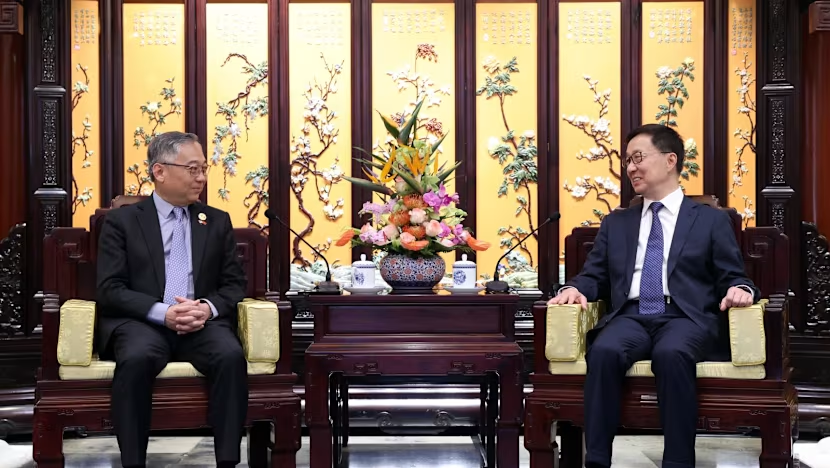
Gan’s Beijing program highlighted the depth of Singapore-China ties. At the Diaoyutai State Guesthouse, he was hosted to lunch by Vice President Han Zheng. The discussions focused on boosting trade flows, advancing investment opportunities, and ensuring resilient supply chains amid global economic uncertainties.
Vice Premier He Lifeng, who oversees China’s economic and financial policies, also met Gan for a wide-ranging dialogue. Both leaders emphasized that Singapore and China share common interests in sustainable growth, financial cooperation, and innovation-driven development.
With Commerce Minister Wang Wentao, Gan discussed practical ways to enhance bilateral trade, including digital economy partnerships, green development, and expanded access for businesses in both markets.
35 Years of Diplomatic Relations
This year marks 35 years since Singapore and China formally established diplomatic ties in 1990. Over that period, the relationship has evolved into a comprehensive, high-quality partnership.
Singapore is one of China’s most significant foreign investors, while China has consistently ranked as Singapore’s largest trading partner since 2013. In 2023 alone, bilateral trade exceeded US$120 billion, reflecting the strong interdependence of both economies.
Gan highlighted the significance of this milestone, saying the anniversary is not only a time to celebrate past achievements but also to chart a path forward. “Our partnership with China continues to grow stronger as we adapt to new global realities,” he said.
Strengthening Economic and Trade Links
At the heart of the discussions was a shared commitment to ensuring the smooth flow of trade and investment.
Both sides reaffirmed their support for the rules-based multilateral trading system, emphasizing the role of the World Trade Organization (WTO) in upholding fair and open trade.
They also discussed strengthening cooperation in:
- Digital economy: Expanding e-commerce platforms, cross-border digital payments, and fintech collaborations.
- Green development: Joint projects in renewable energy, carbon markets, and sustainable urban solutions.
- Financial services: Enhancing capital market linkages and encouraging financial institutions to support regional growth.
- Innovation and technology: Building stronger research and development partnerships in artificial intelligence, biotech, and advanced manufacturing.
Gan noted that as global supply chains shift, Singapore and China can play a leading role in ensuring stability and resilience across Asia.
Strategic Importance of the Visit
Gan’s trip comes at a time of significant change in the global economic landscape. With geopolitical tensions, inflationary pressures, and slowing global growth, both Singapore and China are seeking to reinforce regional cooperation.
For Singapore, deepening its partnership with China helps secure long-term trade and investment opportunities while anchoring itself as a hub for finance, logistics, and innovation.
For China, strengthening ties with Southeast Asia is critical to its Belt and Road Initiative (BRI) and its broader efforts to engage with the ASEAN region. Singapore, as a founding ASEAN member, plays an influential role in shaping the region’s economic trajectory.
A Relationship Built on Flagship Projects
Singapore-China cooperation is anchored in a series of flagship government-to-government projects that showcase their long-standing partnership.
- Suzhou Industrial Park (1994): A pioneering venture that became a model for modern industrial development in China.
- Tianjin Eco-City (2008): A project focused on sustainable urban living and green innovation.
- Chongqing Connectivity Initiative (2015): Strengthening trade, financial, and digital connectivity across Western China.
These projects, combined with regular high-level exchanges, demonstrate how the bilateral relationship has evolved from trade and investment into strategic collaboration across multiple sectors.
Looking Ahead: Opportunities and Challenges
As Singapore and China look toward the future, opportunities abound — but so do challenges.
Opportunities
- Expanding cooperation in climate action and sustainability.
- Leveraging Singapore’s role as a financial hub to attract investment into Chinese projects.
- Growing the digital economy and building secure cross-border data systems.
- Developing talent and education partnerships to support future industries.
Challenges
- Navigating geopolitical tensions between China and major Western economies.
- Ensuring fair competition and market access for Singaporean firms in China.
- Managing differences in regulatory frameworks for digital and financial services.
Gan stressed that while the global landscape is evolving, Singapore and China must stay committed to open dialogue, trust, and pragmatic cooperation.
Deputy Prime Minister Gan Kim Yong’s visit to China reaffirmed the enduring strength of Singapore-China relations as both nations celebrate 35 years of formal diplomatic ties.
By committing to deeper trade flows, stronger investment partnerships, and closer cooperation in green and digital sectors, Singapore and China are not only shaping their bilateral future but also contributing to the stability and prosperity of the wider region.
As Gan put it, the partnership is built on mutual trust and shared interests: “We will continue to work with China to ensure our economies remain resilient, innovative, and ready for the future.”

