
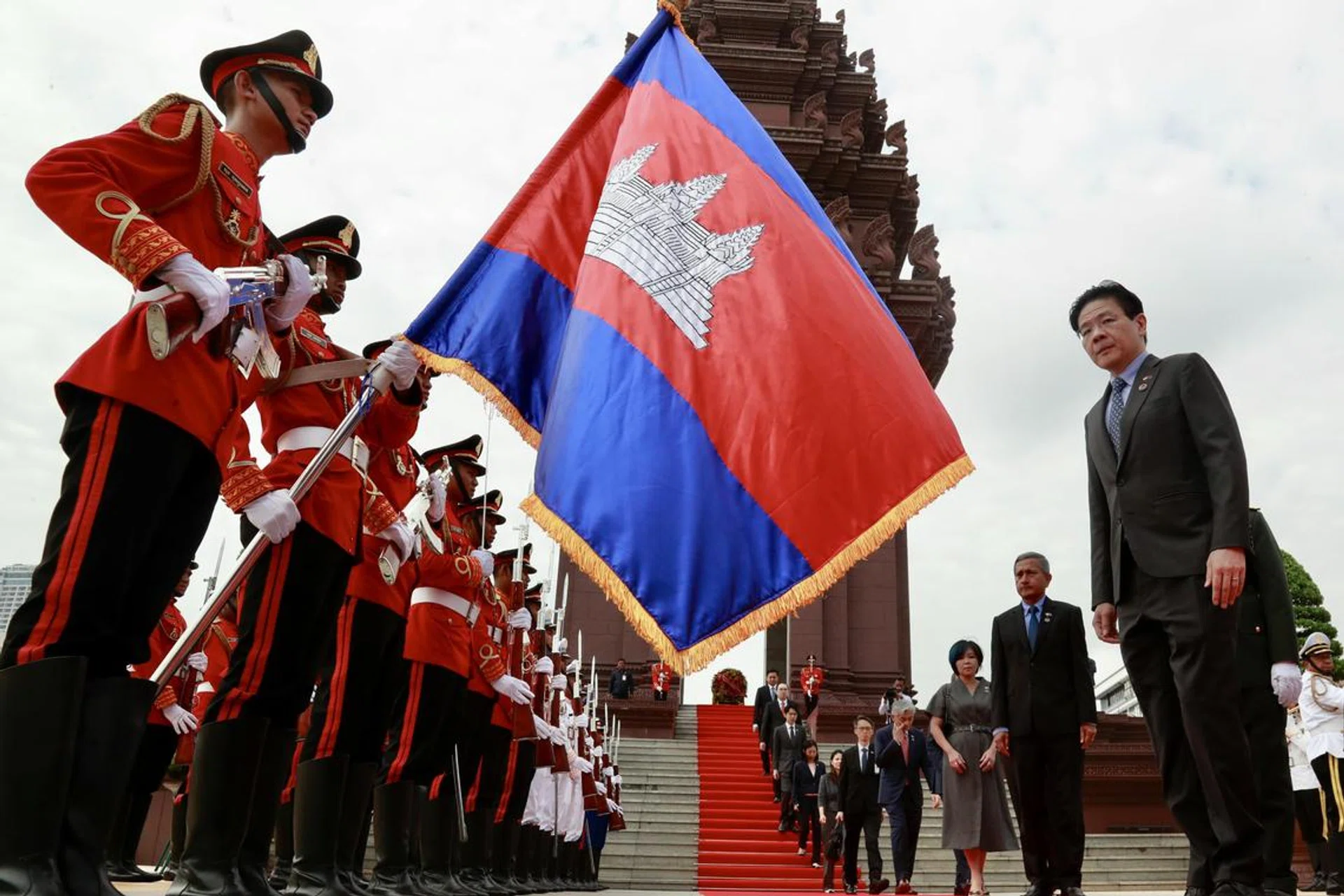
Singapore and Cambodia Just Sealed a Bold New Pact – Here’s What It Means for Southeast Asia

As the two nations mark 60 years of diplomatic ties, their renewed collaboration on energy, climate finance, and agri-trade could reshape ASEAN’s future
Stronger Together: A Symbolic Milestone in Phnom Penh
Singapore and Cambodia have just taken a major step forward in their bilateral relationship — and it could have ripple effects across Southeast Asia. On July 2, 2025, Singapore Prime Minister Lawrence Wong met with Cambodian Prime Minister Hun Manet at the Peace Palace in Phnom Penh, where the two leaders recommitted their countries to a range of shared goals.
This wasn’t just another diplomatic visit. It was part of a larger narrative — one that’s tied to 60 years of diplomatic relations between the two countries, and to an ambitious future focused on sustainable energy, climate finance, regional cooperation, and agriculture.
Singapore’s New PM Continues ASEAN Tour
Lawrence Wong’s visit to Cambodia marks the eighth stop in his ongoing tour of ASEAN member states — a key priority for the new Singaporean leader. Over the past year, he has visited Brunei, Malaysia, Laos, Indonesia, Thailand, Vietnam, and the Philippines, reinforcing Singapore’s commitment to regional unity and shared prosperity.
His one-day stop in Cambodia was filled with meaning. Beyond the celebratory lunch and formalities, both governments sent a strong message: Southeast Asia’s future will be built on clean energy, resilient economies, and regional partnerships.
From Shared History to Future Vision
In his toast speech during the official luncheon, PM Wong emphasized how far Singapore and Cambodia have come since establishing diplomatic relations in 1965 — and how much more they intend to achieve together.
“Our ties have stood the test of time, and we are now laying the foundation for the next chapter,” Wong said. “That means working hand-in-hand to tackle the biggest challenges of our time — climate change, energy security, and sustainable development.”
Hun Manet echoed this sentiment, praising Singapore as a “reliable partner” and highlighting opportunities in agriculture, investment, infrastructure, and environmental initiatives.
Four Key Areas of Collaboration
So, what exactly are Singapore and Cambodia planning to work on together? The joint efforts span four major areas:
1. Renewable Energy Trade
With energy demands rising across ASEAN and the global push toward net zero gaining momentum, cross-border clean energy cooperation is now critical. Both countries discussed ways to build sustainable infrastructure that allows for renewable electricity trading, including solar and hydropower.
This complements Singapore’s broader goal to import 4 gigawatts of low-carbon electricity by 2035 — and Cambodia’s strategy to increase the share of renewables in its national grid.
2. High-Integrity Carbon Markets
Climate finance and carbon credit trading are taking center stage in Southeast Asia’s environmental strategy. Singapore has emerged as a leader in developing high-integrity carbon markets under Article 6 of the Paris Agreement — and it sees Cambodia as a strategic partner in scaling that ambition.
The two governments aim to collaborate on establishing transparent, credible carbon offset mechanisms that can support sustainable projects in Cambodia while helping businesses in Singapore meet net-zero commitments.
3. Agri-Trade and Food Security
Singapore, a global hub with limited arable land, depends heavily on food imports — and Cambodia, with its rich agricultural potential, is a natural partner. The renewed partnership aims to strengthen agri-trade channels, ensuring more efficient and resilient food supply chains.
Expect to see new joint initiatives in areas like crop diversification, sustainable farming, and digital agriculture, leveraging tech and finance to boost productivity in Cambodia and enhance Singapore’s food security.
4. ASEAN Centrality and Regional Cooperation
Both leaders reaffirmed their unwavering support for ASEAN centrality, particularly at a time of shifting global power dynamics and economic fragmentation.
They emphasized that ASEAN must remain united and proactive, especially in global forums dealing with trade, climate, and regional security.
A Shared Vision Beyond Borders
What stands out most from this visit isn’t just the deals and diplomacy — it’s the shared values and vision. Both nations see climate change not just as a challenge but an opportunity. Both recognize that inclusive development and sustainable trade are keys to long-term regional stability.
Their collaboration is a reflection of what modern diplomacy should look like: grounded in history, but driven by innovation.
Looking Ahead: From Talk to Action
This high-level visit has laid the groundwork — now the real work begins.
Singapore and Cambodia will need to translate policy into action, ensuring that the ambitions on clean energy, carbon finance, and food trade turn into tangible outcomes. This will require not only government coordination but also private sector engagement, international support, and grassroots involvement.
And as the world watches how ASEAN responds to climate and energy challenges, this partnership may just offer a blueprint for how smaller nations can lead the way.
Celebrating 60 Years — and Building the Next 60
2025 marks a diamond anniversary for Singapore and Cambodia — but their vision isn’t focused on the past. It’s fixed firmly on the future.
Through bold climate goals, forward-thinking trade initiatives, and a commitment to ASEAN unity, the two nations are reminding the world that regional diplomacy still matters — and it still works.
In an era of global uncertainty, this partnership proves that Southeast Asia can shape its own destiny.

