
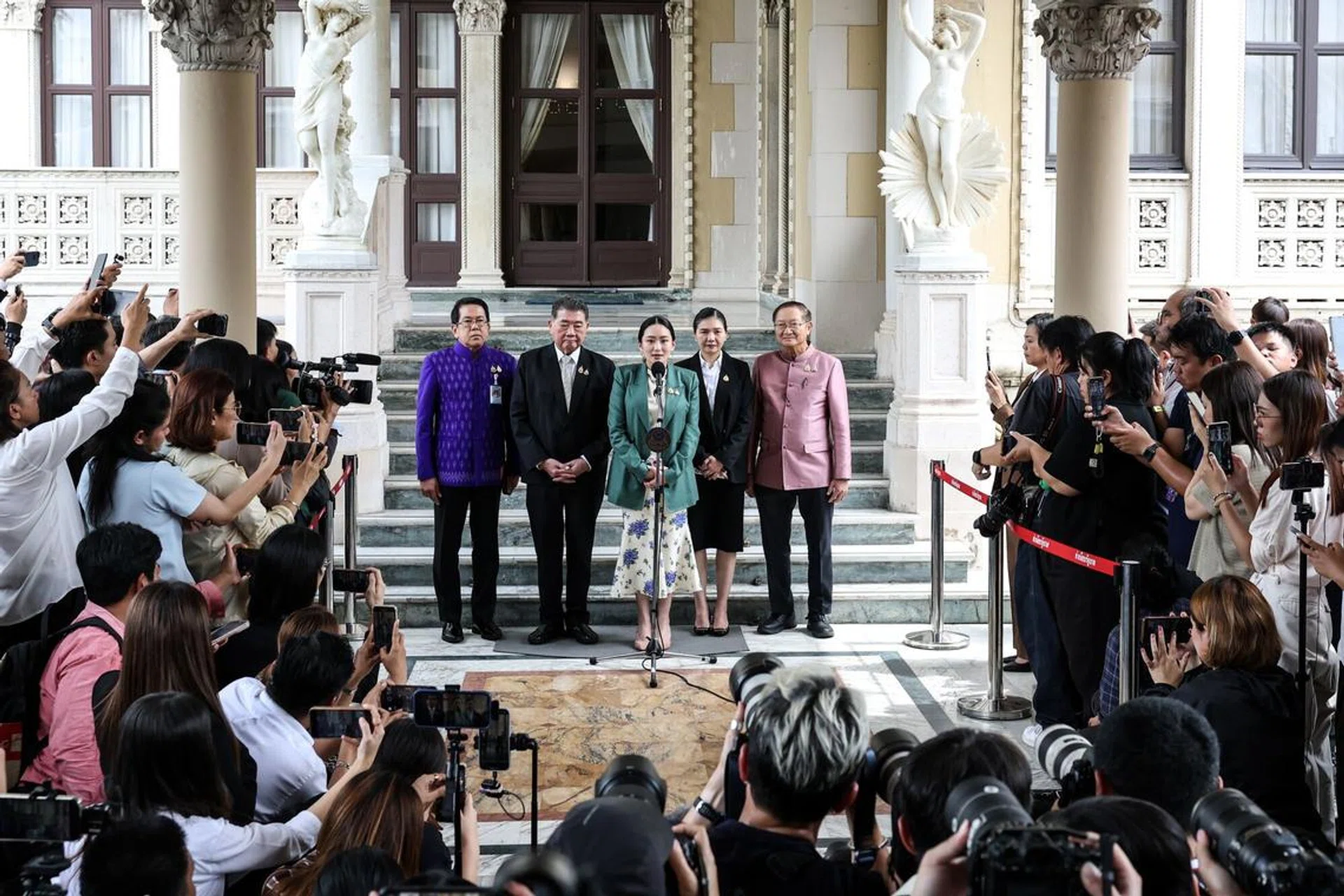
High Stakes: Thailand’s Fragile Economic Recovery Under Threat Amid PM Suspension and US Tariff Pressure

Thailand’s already fragile post-pandemic economic recovery has been dealt a major blow with the Constitutional Court’s suspension of Prime Minister Paetongtarn Shinawatra. The suspension, which follows the leak of a controversial phone call with Cambodian leader Hun Sen, has plunged the country into political uncertainty at a time when economic stability is more critical than ever. Coupled with the looming threat of US tariffs and slowing global demand, the suspension risks triggering a chain reaction that could stall economic momentum and shake investor confidence.
Political Crisis Unfolds
On July 1, the Constitutional Court voted 7-2 to suspend Prime Minister Paetongtarn Shinawatra pending a full investigation. The suspension stemmed from allegations that the leaked phone call violated ethical standards and compromised national dignity. In the recording, Paetongtarn referred to a senior Thai general as an “opponent” and addressed Cambodian Prime Minister Hun Sen in a manner deemed inappropriate by critics.
While the decision may ease tensions among anti-government protesters in the short term, it has ushered in a fresh wave of uncertainty. Deputy Prime Minister Suriya Juangroongruangkit is now acting as caretaker, but with the court expected to deliberate for several months, Thailand faces the prospect of a prolonged power vacuum. This political deadlock could have significant implications for government spending, policy direction, and investor sentiment.
Budget Paralysis and Delayed Spending
One of the immediate consequences of the political crisis is the delay in passing Thailand’s 2026 Budget. The proposed spending plan, essential for funding infrastructure, welfare, and civil servant salaries, is now stuck in limbo. Without a stable administration to push the legislation through Parliament, critical public sector projects could be delayed or shelved entirely.
This delay also impacts investor confidence. Infrastructure and digital transformation projects that require government backing may be paused, which could lead to a slowdown in employment and domestic demand. Moreover, a lack of fiscal clarity could increase borrowing costs, widen the fiscal deficit, and put pressure on the baht.
External Pressure from US Tariffs
Adding to Thailand’s woes is the threat of new US tariffs. Washington is reportedly considering placing higher duties on several Thai exports, particularly in electronics and auto components, over unresolved trade and security concerns. These tariffs are set to come into effect as early as July 9 unless negotiations yield a compromise.
Exports form the backbone of Thailand’s economy, accounting for over 60% of GDP. Any disruption to trade with the US—one of its largest markets—would have serious repercussions. Manufacturers may be forced to cut production or shift operations, while job losses in key sectors such as automotive, electronics, and agriculture could follow.
The Ministry of Commerce is in ongoing talks with US trade representatives, but the leadership crisis has cast doubt on Thailand’s ability to negotiate effectively. Without a functioning government, trade diplomacy risks stalling at a crucial moment.
Market Jitters and Investor Concerns
Financial markets responded with initial relief at the potential for reduced street protests, but that optimism faded quickly. The Thai stock market, already among Asia’s worst performers this year, remains volatile. The baht has weakened, and foreign capital inflows have slowed as investors adopt a wait-and-see approach.
Thailand’s sovereign credit outlook, while still stable, could face downgrades if prolonged political instability hampers economic management. Analysts warn that failure to pass the budget, coupled with deteriorating export performance, could lower GDP growth to as little as 1.6% for the year.
The uncertainty also puts pressure on Thailand’s central bank. With inflation under control and growth faltering, the Bank of Thailand may be forced to consider monetary easing. But with global interest rates still relatively high, lowering rates could risk capital flight and further weaken the currency.
Structural Weaknesses Resurface
The current crisis has also brought long-standing structural issues back into focus. Household debt in Thailand remains alarmingly high, hovering around 87% of GDP. Many Thai families are struggling with rising living costs and stagnant wages, while the government’s efforts to stimulate demand have been modest at best.
Tourism, another major revenue stream, has yet to return to pre-pandemic levels. While there has been a partial recovery in arrivals from China, concerns about regional instability and domestic safety continue to deter international visitors. The tourism industry is also grappling with labor shortages and inconsistent policy direction, further hindering growth.
Thailand’s manufacturing sector is under pressure from rising input costs, supply chain bottlenecks, and global demand volatility. The current leadership crisis threatens to worsen these problems by delaying policy initiatives aimed at digital transformation, SME development, and green energy investment.
Military Oversight and Coup Anxiety
Thailand has experienced multiple coups in recent decades, and the military remains a powerful force in the country’s political landscape. While there is no immediate sign of intervention, the potential for military involvement cannot be dismissed. If the political deadlock drags on, and if public confidence in the civilian government deteriorates further, calls for a military-led solution could gain traction.
Such an outcome would send shockwaves through financial markets and strain international relations, particularly with Western allies. It would also undermine Thailand’s efforts to present itself as a stable hub for foreign investment in Southeast Asia.
Path Forward: What Thailand Needs
To stabilize its economy and reassure stakeholders, Thailand must urgently address the following:
- Restore Political Stability: The court must expedite its ruling, and the ruling coalition must provide clarity on succession planning and governance.
- Prioritize Budget Approval: Parliament must fast-track the 2026 Budget to avoid delays in public services and infrastructure.
- Reinforce Trade Diplomacy: Trade authorities must intensify negotiations with the US to prevent tariff hikes that would cripple exports.
- Support Domestic Demand: Policymakers should introduce targeted stimulus measures, especially for households and small businesses.
- Reassure Investors: Thailand’s central bank and finance ministry must offer clear communication on macroeconomic strategy to regain investor confidence.
Thailand’s road to recovery has hit a significant speed bump. The suspension of Prime Minister Paetongtarn has sparked political uncertainty at a time when economic fragility is already evident. With US tariffs on the horizon, delayed budget spending, and market instability, the stakes have rarely been higher. Whether Thailand can steer through this storm will depend on its ability to restore governance quickly, manage external shocks, and deliver clear, credible economic policy. The months ahead will be critical—not just for Thailand’s economy, but for its democratic resilience.

