
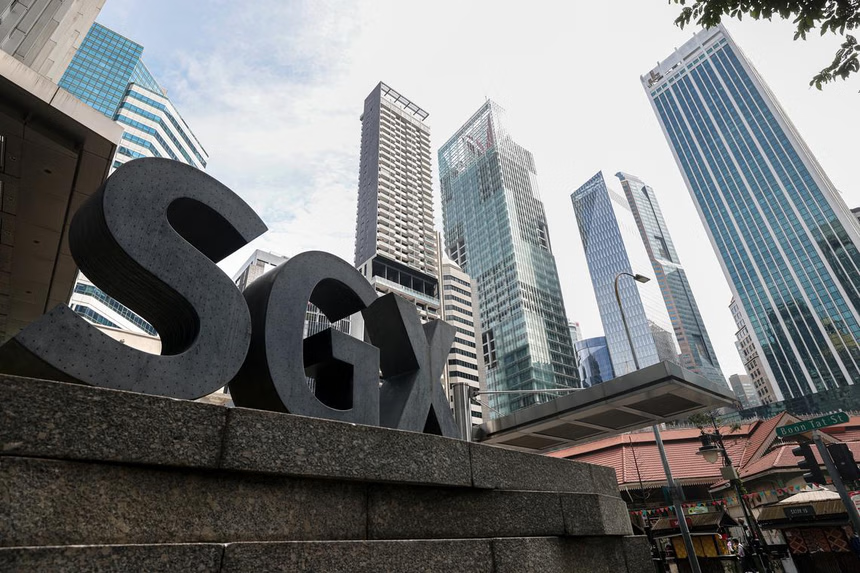
Market Carnage: Singapore Bank Stocks Hit Hard as STI Plunges 8%, Hong Kong Takes a 13% Dive

It’s been a day of market mayhem in Asia, with the Straits Times Index (STI) in Singapore taking a massive hit. On April 7, stock markets across the region, including Hong Kong, were battered as fears of a global recession gripped investors. The plunge in the STI, which saw a sharp drop of 8.57%, marks one of the biggest declines in recent history, sparking concern about the future of the global economy.
But what caused this sudden market carnage? The answer lies in the ongoing trade tensions between the US and the rest of the world, particularly US President Donald Trump’s refusal to roll back tariffs. Here’s a breakdown of what happened, what it means for investors, and why the global economy might be in for a rough ride.
Singapore’s Stock Market in Freefall: The STI Plunges 8%
The Straits Times Index (STI), which tracks the performance of Singapore’s blue-chip stocks, took a severe blow when trading opened on April 7. The index fell by 328.20 points, or 8.57%, bringing the STI down to 3,497.66. This marks the index’s largest intraday loss since the global financial crisis back in October 2008.
For context, the STI’s drop is even larger than the 8.4% drop seen during the market sell-off in March 2020 at the height of the COVID-19 pandemic. To say the market is reeling would be an understatement.
Why the Sudden Drop? The Tariff Dilemma
So, why did the markets react so violently? The trigger appears to be the escalating trade tensions sparked by US President Donald Trump’s recent decision to maintain, and even increase, tariffs on global imports. His stance on the matter has caused widespread concerns that these tariffs could push the world into a full-blown recession.
In a nutshell, tariffs are taxes placed on imported goods, which often lead to higher prices for consumers. While President Trump has justified his tariffs as necessary to protect US industries, many experts argue that these measures disrupt the global trade system, causing a ripple effect across international markets. The fear is that these trade disputes could slow down global growth, increase inflation, and lead to a worldwide economic downturn.
The Impact on Singapore’s Financial Sector
As one of the most important financial hubs in Asia, Singapore’s financial sector took a significant hit as well. Bank stocks were among the hardest hit, with shares in major banks like DBS, OCBC, and UOB falling sharply.
These banks, which have a heavy reliance on global trade and financial flows, are especially vulnerable to the negative effects of rising tariffs. If global growth slows down, it could impact the profitability of these institutions, making investors wary.
While the fall in bank stocks was dramatic, it wasn’t isolated to Singapore. Other Asian markets, including Hong Kong, also saw massive declines. Hong Kong’s Hang Seng Index plunged by 13.2%, a staggering drop that sent shockwaves through the region’s investors.
Global Stock Market Sell-Off: The Ripple Effect
The sell-off in Asian markets wasn’t just limited to Singapore and Hong Kong. The broader global stock market is feeling the pain, with global indices like the Dow Jones and the FTSE 100 also facing steep declines. Investors are growing increasingly concerned that the ongoing trade war between the US and other major economies could trigger a recession, dragging down stock prices everywhere.
The deepening trade tensions are not just a worry for stocks—they are also contributing to the instability of currencies, commodities, and even real estate markets. This global market rout highlights the interconnectedness of the world economy. When major economies like the US and China get into a trade dispute, the effects can be felt all over the globe.
Singapore’s Economy: What’s at Stake?
Singapore’s economy is heavily reliant on trade, making it particularly sensitive to global market movements. With its status as a global financial center and one of the world’s busiest ports, the city-state is deeply integrated into the global supply chain. When global trade slows down, Singapore feels the impact more than most.
As global tariffs rise and trade wars escalate, Singapore may face slower growth, higher costs for imported goods, and reduced demand for exports. While Singapore has a relatively low tax rate of 10%, the country’s open, trade-dependent economy is highly vulnerable to shifts in global trade policy.
Is a Global Recession on the Horizon?
The big question on everyone’s mind is whether this market carnage is just a temporary setback or the beginning of a larger economic downturn. The rising tariffs, particularly from the US, are certainly raising red flags. Economists are warning that if these trade tensions continue, it could push the global economy into recession.
A global recession would be characterized by slow growth, high unemployment, and decreased consumer spending. For investors, that could mean a prolonged bear market, with stock prices continuing to slide. For ordinary people, a recession often leads to job losses, higher living costs, and a general slowdown in the economy.
While it’s too early to say for certain whether we’re headed for a recession, the signs are worrying. Rising tariffs, combined with political instability and an unpredictable global economic environment, are creating a perfect storm for a global slowdown.
How Should Investors Respond?
If you’re an investor, the current market volatility might leave you feeling anxious. In times like this, it’s important to stay informed and stay calm. While it’s tempting to panic and sell off stocks, experts often advise against making hasty decisions during a market downturn.
Instead, consider the long-term outlook. Historically, markets have recovered from major downturns, though it can take time. Diversifying your portfolio and being patient are key strategies to weather these uncertain times.
Additionally, it’s a good idea to focus on industries and companies that are less sensitive to global trade issues. For example, companies that rely more on domestic markets or essential goods might fare better than those heavily reliant on international trade.
The Road Ahead for Global Markets
The sharp decline in the STI and other Asian markets is a clear indication that global trade tensions are having a significant impact on the economy. With tariffs and protectionist policies on the rise, investors are becoming increasingly nervous about the possibility of a global recession.
For now, Singapore’s economy and stock market will likely continue to feel the effects of these tensions. However, the country’s resilience and commitment to free trade mean that it could bounce back once the dust settles.
As for global markets, only time will tell if this is a temporary setback or the beginning of a larger economic downturn. What’s clear is that uncertainty is the new normal, and investors should remain cautious as they navigate these turbulent waters.