
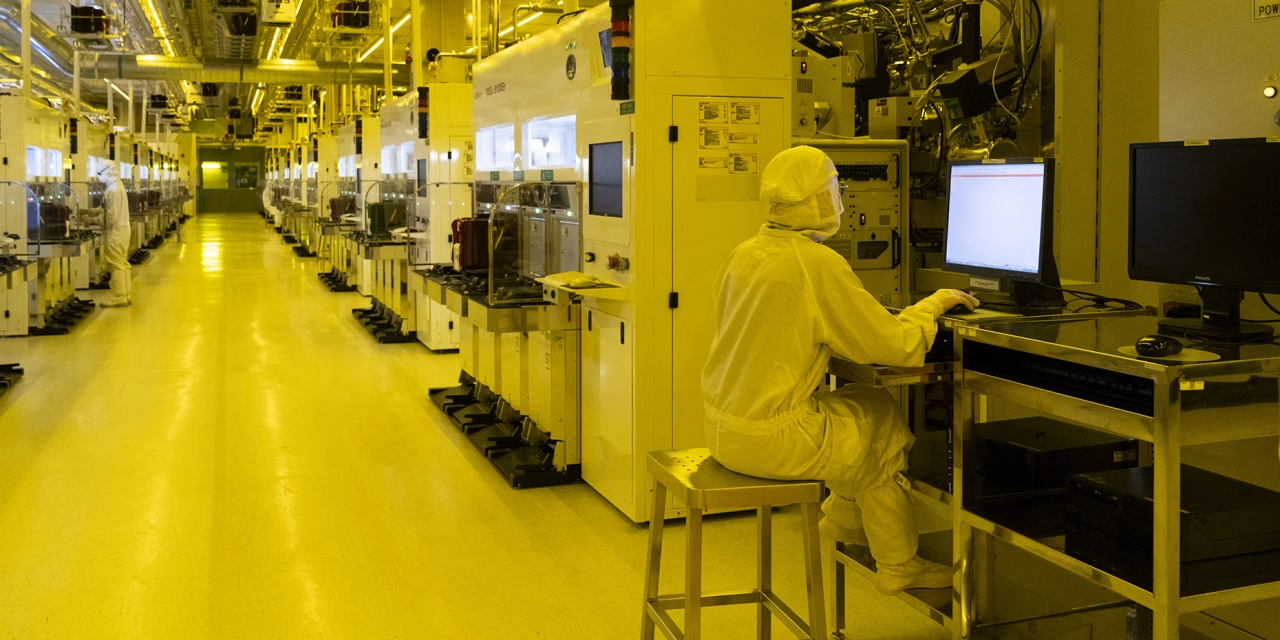

Manufacturing CEOs in Singapore are increasingly turning to smart factory models as a strategic response to rising operational costs, labour constraints, and global supply chain uncertainties. By integrating automation, data analytics, and digital technologies across factory floors, leaders aim to improve efficiency while maintaining Singapore’s reputation for high-quality, precision-driven manufacturing.
At the heart of the smart factory concept is the use of Industry 4.0 technologies, including Industrial Internet of Things (IIoT), robotics, artificial intelligence, and real-time data monitoring. These tools enable manufacturers to gain deeper visibility into production processes, identify inefficiencies instantly, and reduce wastage. For CEOs, the shift is no longer experimental but a business necessity driven by cost optimisation and long-term competitiveness.
One of the key pressures pushing manufacturers toward smart factories is rising labour costs. Singapore’s tight labour market and reliance on skilled talent have increased wage expenses across industrial sectors. Smart automation allows factories to handle repetitive and labour-intensive tasks with fewer workers while reallocating human resources to higher-value roles such as process optimisation, quality control, and engineering oversight. CEOs view this as a balanced approach that enhances productivity without compromising employment quality.
Energy and material costs have also become major concerns for manufacturing leaders. Smart factories use predictive analytics to monitor machine performance and energy consumption, helping companies minimise downtime and prevent equipment failures. Sensors and AI-driven systems can detect anomalies early, reducing costly repairs and unplanned shutdowns. Over time, these efficiencies translate into significant cost savings, making capital investment in digital infrastructure financially justifiable.
Supply chain volatility has further accelerated adoption. Global disruptions over recent years have highlighted the need for resilient and flexible production systems. Smart factories enable real-time inventory tracking and adaptive production planning, allowing manufacturers to respond quickly to changes in demand or supply constraints. CEOs note that this agility is crucial for serving international clients who expect reliability despite uncertain global conditions.
Another major advantage of smart factory models is improved quality control. Advanced imaging systems, automated inspections, and data-driven quality checks reduce error rates and product defects. For Singapore-based manufacturers, many of whom operate in electronics, precision engineering, and pharmaceuticals, maintaining consistent quality is essential to protect brand reputation and meet stringent regulatory standards. CEOs increasingly see digital quality assurance as both a cost-saving and risk-mitigation tool.
Government support has also played a significant role in encouraging this transition. Singapore’s broader push toward advanced manufacturing and digital transformation has created a favourable ecosystem for innovation. Incentives, grants, and partnerships with research institutions have reduced the financial and technical barriers to smart factory adoption. CEOs acknowledge that this supportive environment allows even mid-sized manufacturers to modernise without excessive financial strain.
However, the transition is not without challenges. Initial implementation costs, cybersecurity risks, and the need for workforce upskilling remain key concerns. Manufacturing leaders stress that technology alone is not enough; success depends on training employees to work alongside advanced systems and fostering a culture that embraces continuous improvement. Many CEOs are investing in digital literacy programmes to ensure teams can fully leverage new technologies.
Looking ahead, Singapore manufacturing CEOs believe smart factories will become the industry standard rather than a competitive advantage. As cost pressures persist and global competition intensifies, digitally enabled operations are expected to define the next phase of industrial growth. By embracing smart factory models today, manufacturing leaders aim to build resilient, efficient, and future-ready businesses that can thrive in an increasingly complex economic landscape.

