
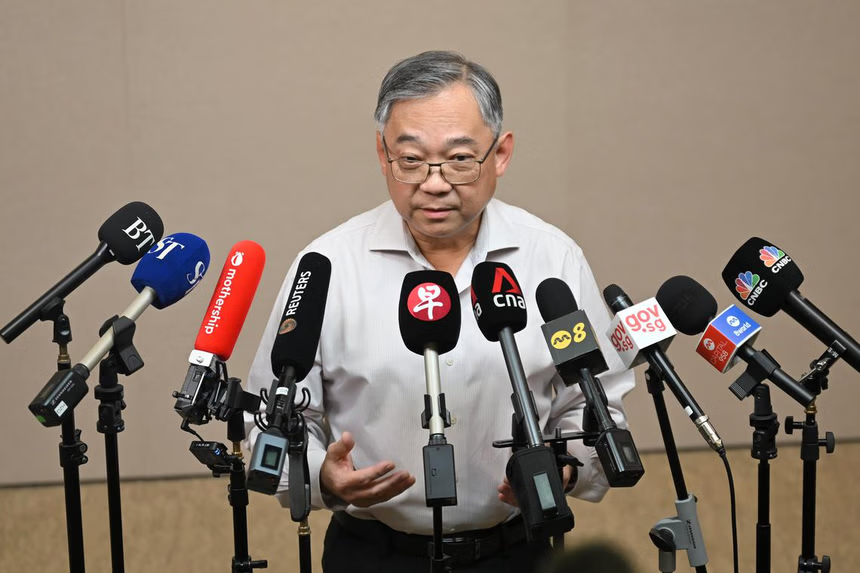
US Tariffs Could Spark Global Trade War, Threaten Singapore’s Growth: DPM Gan Kim Yong

Singapore could face significant economic challenges following the US’s decision to impose tariffs on imports, according to Deputy Prime Minister Gan Kim Yong. The new tariffs, which target a wide range of goods coming into the US, could not only affect Singapore but may also escalate into a global trade war, he warned.
US Tariffs: What’s Happening?
On April 3, US President Donald Trump announced that imports from Singapore and other key trading partners would be hit with a 10% tariff. This move comes as part of a broader effort by the US to protect its domestic industries and reduce its trade deficit.
While some countries are facing even higher tariffs — including 25% for China and 24% for Japan — Singapore’s goods will be subject to the 10% levy. This could make exports from Singapore more expensive and hurt businesses that rely on the US market.
How Will This Affect Singapore?
DPM Gan Kim Yong, who is also Singapore’s Minister for Trade and Industry, spoke out about the possible economic fallout of the US tariff decision. He said that the tariffs could dampen Singapore’s economic growth, especially since the US is one of Singapore’s largest trading partners.
Singapore’s export-driven economy means that any disruption in global trade can have far-reaching effects. If the tariffs lead to a global trade war, it could make goods more expensive worldwide, reduce demand for exports, and harm growth in many countries — including Singapore.
The Risk of a Global Trade War
Experts warn that the US tariffs could spark a global trade war, with countries retaliating by imposing their own tariffs on US goods. Such a scenario could escalate tensions between the US and its major trading partners, such as China, the European Union, and Japan.
The impact of a global trade war could be devastating, leading to slower global growth, higher prices for consumers, and disrupted supply chains. For a small, trade-dependent nation like Singapore, the stakes are high.
The Bigger Picture: A Global Economic Slowdown
The US tariffs are just one part of a much bigger issue. A global trade war could lead to slower economic growth across the world. Countries may begin to erect trade barriers, making it more difficult for businesses to operate internationally. This could result in reduced demand for goods, slower business expansion, and higher costs for everyone.
What’s Next for Singapore?
While the impact of the tariffs on Singapore is still uncertain, DPM Gan Kim Yong emphasized the need for Singapore to remain agile and adapt to the changing trade environment. He also suggested that Singapore would work with other countries to mitigate the negative effects of the US tariffs, promoting free trade and economic cooperation.
However, the threat of a global trade war looms large. If the situation escalates, Singapore’s growth forecast may need to be adjusted, as the country’s export-driven economy is highly vulnerable to international trade disruptions.
Waiting to See What Happens
As the US’s tariff strategy unfolds, Singapore is closely monitoring the situation. While the country is not facing the worst-case scenario yet, there’s still concern that the US tariffs could have a significant impact on its economic growth. The possibility of a global trade war only adds to the uncertainty.
For now, Singapore will need to focus on maintaining trade relationships with key partners and seeking new markets to ensure its economic resilience. But with tensions rising, it’s clear that global trade dynamics are in for a bumpy ride.

