
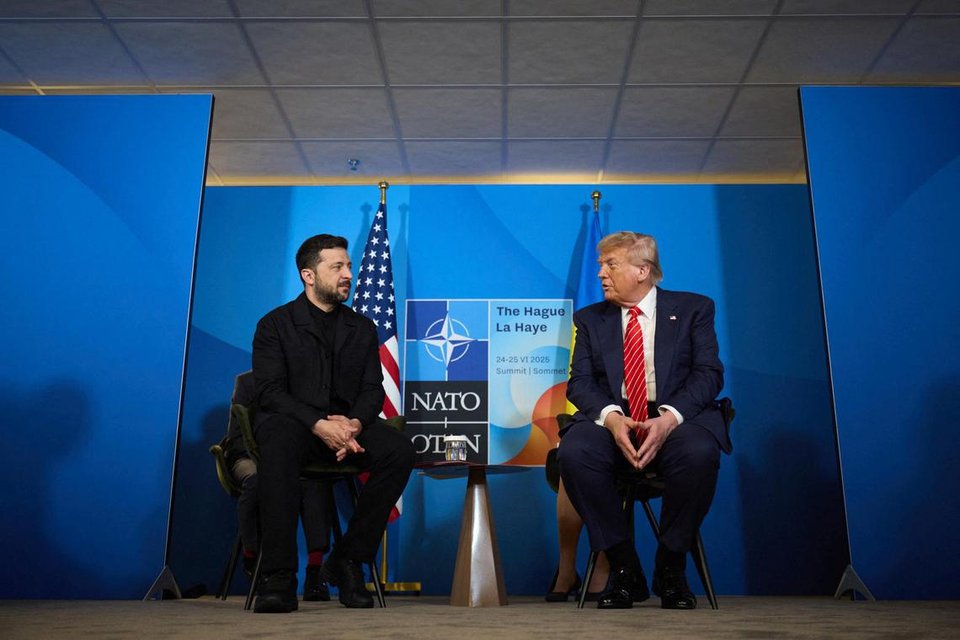

In a significant shift from his earlier positions, U.S. President Donald Trump has authorized the deployment of approximately $300 million worth of weapons to Ukraine. The decision, made under the Presidential Drawdown Authority (PDA), signals renewed interest in aiding Kyiv as Russian advances intensify more than three years into the conflict.
The move marks the first time since returning to the White House that Trump has utilized this emergency power, which allows the president to transfer military equipment directly from U.S. stockpiles to foreign allies in urgent need—without the delay of congressional approval. It’s a mechanism widely employed during Joe Biden’s presidency to expedite support for Ukraine and other global security partners.
What’s in the Package?
While the exact composition of the package is still being finalized, administration officials say it will likely include Patriot air-defense interceptors and Guided Multiple Launch Rocket Systems (GMLRS), both of which are critical to Ukraine’s ongoing defense operations. These systems, previously part of aid packages under the Biden administration, have proved essential for defending Ukrainian cities from missile and drone attacks.
The weapons are expected to be shipped rapidly, with much of the matériel already positioned in U.S. military depots in Europe. This logistical advantage allows for near-immediate delivery once final orders are signed.
Why Now?
Trump’s decision comes on the heels of a brief Pentagon-imposed pause in arms transfers, which was attributed to concerns about diminishing U.S. defense inventories. The pause had caused alarm in Kyiv, particularly as Russian forces ramped up offensive operations in the east.
According to officials familiar with the matter, Trump was surprised by the scope and impact of the pause. After a high-level review, he ordered that key shipments resume and authorized additional assistance through the PDA. In public remarks days before the announcement, Trump acknowledged that Ukraine was “getting hit very hard” and emphasized that the U.S. must ensure the country could “defend itself.”
This apparent shift in tone follows months of ambiguity in Trump’s stance on Ukraine, during which he expressed skepticism about the long-term benefits of continued military aid. His critics accused him of wavering on U.S. commitments to Europe, while supporters defended his focus on U.S. strategic interests and caution against overextension.
A Tactical, Not Strategic, Recommitment
Despite approving this latest tranche of aid, Trump has not laid out a comprehensive Ukraine strategy or a long-term commitment to Kyiv. Administration insiders describe the move as tactical—aimed at immediate stabilization on the battlefield—rather than a signal of a broad change in policy.
The package is also notable for being pulled from existing U.S. stockpiles. This suggests that the administration is wary of new funding requests or large-scale arms contracts, particularly in a tense fiscal environment and with 2026 elections looming.
The use of PDA circumvents many of the legislative hurdles that would otherwise accompany such an aid package, allowing the president to act quickly in response to operational realities without needing new appropriations from Congress.
Strategic Timing and Political Calculus
The timing of the announcement is critical. Russian forces have been increasing pressure on several Ukrainian cities, and reports from the front lines indicate that Ukraine’s air defense resources are becoming dangerously thin.
Trump’s decision is likely aimed at addressing that vulnerability while simultaneously asserting control over the aid narrative. It allows the administration to maintain U.S. influence in the conflict without committing to open-ended funding packages—a concern among fiscal conservatives and isolationist wings of his party.
Furthermore, by drawing on a tool heavily used by his predecessor, Trump may be seeking to both affirm U.S. leadership abroad and deflate criticism that his foreign policy lacks coherence or direction.
How This Compares to Biden-Era Support
Under the Biden administration, the U.S. provided roughly $175 billion in total aid to Ukraine, including nearly $50 billion in direct military assistance. Much of this came through PDA or the Ukraine Security Assistance Initiative (USAI). By contrast, Trump’s approval of a $300 million package represents a modest but symbolically significant commitment.
The contrast in scale may reflect differing philosophies: Biden sought to project long-term support to deter Russian escalation, while Trump is pursuing a more transactional, immediate-return model of engagement.
Domestic and International Reactions
The announcement drew mixed reactions across the political spectrum. Some Democrats cautiously welcomed the move, noting the urgent need to back Ukraine, while criticizing the administration for recent delays. Republican reaction was more fragmented: foreign policy hawks praised the move as overdue, while isolationist factions warned against further entanglement.
In Kyiv, the news was greeted with relief. Ukrainian officials have repeatedly stressed the importance of air-defense systems and precision-guided munitions in holding their current defensive lines. Without sustained Western support, they argue, Ukraine’s capacity to resist Russia’s aggression would rapidly degrade.
European allies, too, have been watching closely. Several NATO countries had privately expressed concern about the U.S. pause in weapons deliveries. Trump’s greenlighting of this aid package may help assuage some of those fears—at least in the short term.
What’s Next?
The administration is expected to release details of the package in the coming days. Pentagon logistics teams are already preparing to begin deliveries, with early shipments likely to arrive in Ukraine within weeks.
Looking ahead, key questions remain unanswered: Will Trump authorize additional packages if the conflict escalates further? Will this become part of a larger policy framework—or is it a one-off?
While the current aid package addresses immediate concerns on the battlefield, it does not resolve the broader strategic uncertainties hanging over U.S. involvement in Ukraine. Still, for now, it offers a crucial lifeline at a critical moment—and a rare glimpse into how Trump’s second-term foreign policy may evolve under pressure.

