

As tensions in the Middle East continue to rise, the United States insists it is gaining the upper hand in the ongoing conflict with Iran. President Donald Trump has repeatedly stated that Washington is winning. But more than two weeks into the war, the global picture looks far more complicated.
In fact, many analysts argue that the only clear winner so far is not the United States or Iran—but Russia.
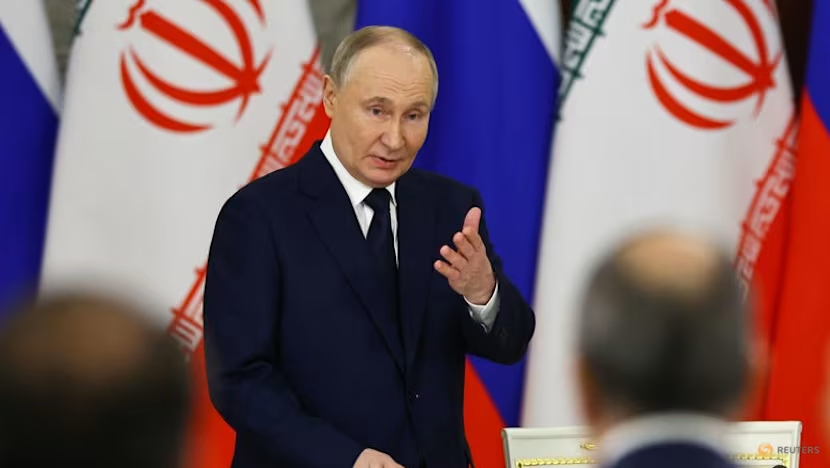
More than 2,300 kilometers away from the battlefield, Russian President Vladimir Putin appears to be benefiting from the chaos. The rapid escalation of the conflict has shifted global attention, changed diplomatic priorities, and opened new strategic opportunities for Moscow.
To understand why Russia may be gaining from this war, we need to look at how quickly the conflict has expanded and how it is reshaping international politics.
How the Iran Conflict Escalated So Quickly
From Tensions to Regional Crisis
The conflict between the United States and Iran did not suddenly appear. Tensions between the two countries have existed for decades, fueled by disagreements over nuclear programs, sanctions, and regional influence.
However, the recent escalation happened at an alarming speed.
Within days of the initial strikes and military responses, the conflict began spreading beyond direct U.S.-Iran confrontations. Regional powers became concerned about their own security, global markets reacted sharply, and diplomatic channels struggled to keep pace with the growing crisis.
Instead of remaining a limited confrontation, the situation began to look like a broader regional conflict.
Why Speed Matters in Modern Wars
In today’s interconnected world, conflicts do not remain isolated for long. Military actions quickly trigger economic consequences, diplomatic responses, and shifts in global alliances.
Iran’s rapid escalation strategy appears designed to widen the crisis quickly. By increasing pressure across the region, Tehran forces other countries to react—whether through diplomacy, security measures, or economic policies.
This widening effect changes the global strategic landscape, often benefiting players who are not directly involved in the fighting.
And that is where Russia comes in.
Why Russia May Be the Quiet Beneficiary
Global Attention Shifts Away From Ukraine
One of the biggest advantages for Moscow is the shift in global attention.
Before the Iran conflict began, the war in Ukraine remained one of the dominant international issues. Western governments were focused heavily on supporting Kyiv and maintaining pressure on Russia.
But the sudden crisis in the Middle East has forced governments to divide their attention.
Diplomatic resources, intelligence efforts, and political focus are now shared between two major conflicts instead of one. For Russia, this distraction can ease some of the international pressure it has faced.
Energy Markets Begin to React
Another area where Russia benefits is the global energy market.
Conflicts in the Middle East often lead to fears of oil supply disruptions. Even the possibility of instability in the region can push global oil prices higher.
Higher oil prices directly benefit major exporters like Russia.
Despite sanctions imposed by Western countries, Russia remains one of the world’s largest energy producers. Rising prices can boost government revenues and strengthen Moscow’s economic position.
Strategic Partnerships Grow Stronger
The Iran crisis also brings new diplomatic opportunities for Russia.
Moscow has long maintained ties with Tehran. While the relationship is complex, both countries share an interest in countering Western influence in global politics.
If the conflict deepens, Russia could position itself as a key diplomatic player—either as a mediator or as a strategic partner to countries seeking alternatives to U.S. leadership.
In global politics, influence often grows not only through military strength but also through the ability to shape negotiations.
The United States’ Claim of Victory
Trump’s Message to the American Public
President Donald Trump has continued to project confidence about the situation. According to his statements, the United States is successfully managing the conflict and maintaining control over its military objectives.
This messaging is not unusual during wartime.
Political leaders often emphasize strength and progress to maintain public confidence and reassure allies. In fast-moving conflicts, narratives can be just as important as battlefield developments.
The Reality of Complex Wars
However, modern wars rarely produce clear winners in the early stages.
Military operations may achieve certain objectives, but the broader geopolitical consequences often unfold over months or even years.
Conflicts reshape alliances, economic systems, and global power balances in ways that are not immediately obvious.
The Iran crisis appears to be following this pattern.
How Iran’s Strategy Changes the Game
Expanding the Conflict Zone
Iran’s rapid escalation has forced the conflict into a larger strategic space.
Instead of limiting hostilities to direct confrontations with the United States, Tehran has pushed the crisis toward becoming a regional issue. This creates pressure points across multiple countries and forces international actors to become involved.
For Iran, expanding the battlefield can reduce the advantages of a stronger opponent.
Turning Global Politics Into a Battlefield
Beyond military tactics, Iran’s approach also targets global political dynamics.
By triggering a crisis that affects energy markets, regional stability, and international diplomacy, Tehran ensures that the conflict becomes a worldwide issue rather than a localized one.
This strategy increases uncertainty—and uncertainty often benefits outside powers that know how to take advantage of shifting conditions.
Russia appears to be one of those powers.
The Bigger Geopolitical Picture
A World With Multiple Conflicts
The Iran war highlights a broader trend in global politics: the emergence of multiple simultaneous conflicts.
Instead of one major international crisis dominating global attention, the world now faces several overlapping flashpoints. From Eastern Europe to the Middle East and beyond, geopolitical tensions are rising in multiple regions at once.
This environment makes it harder for any single country to maintain total strategic focus.
Strategic Opportunities for Rival Powers
For countries like Russia, this fragmented landscape offers opportunities.
When global attention is divided, diplomatic pressure weakens and alliances become more complicated. Governments must prioritize among different crises, sometimes reducing their ability to respond strongly in any single area.
This does not mean Russia controls the outcome of the Iran conflict. But it does mean that Moscow can benefit indirectly from the shifting global focus.
What Could Happen Next
Risk of a Larger Regional War
The biggest concern among analysts is that the conflict could continue expanding.
If more regional actors become involved, the war could transform into a broader Middle Eastern crisis. Such a development would have major consequences for global security, energy markets, and international diplomacy.
Diplomatic Efforts May Intensify
At the same time, global powers may increase diplomatic efforts to prevent further escalation.
Countries in Europe, Asia, and the Middle East all have strong incentives to avoid a prolonged regional war. Behind the scenes, negotiations and back-channel discussions are likely already taking place.
Whether those efforts succeed remains uncertain.
Two weeks into the Iran war, the situation remains fluid and unpredictable.
The United States insists it is making progress, while Iran continues to escalate the conflict across the region. But beyond the immediate battlefield, the geopolitical consequences are already reshaping global dynamics.
Amid this shifting landscape, Russia appears to be gaining strategic advantages without firing a shot in the conflict itself.
By diverting global attention, influencing energy markets, and opening new diplomatic possibilities, the crisis has created opportunities for Moscow.
In modern geopolitics, wars rarely affect only the countries directly involved. Sometimes the biggest winners are those watching from a distance, waiting for the right moment to benefit from the chaos.

