
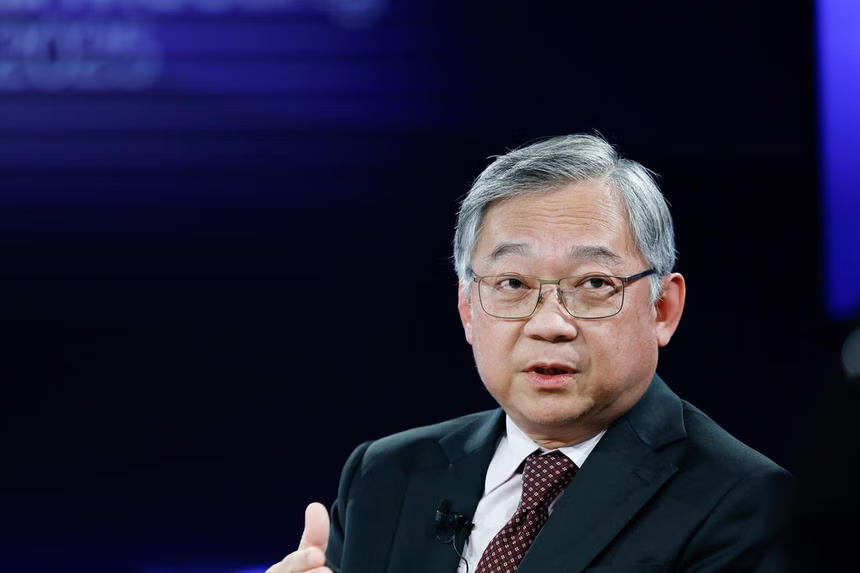

Singapore is taking a balanced approach to the rapid rise of Artificial Intelligence (AI). The country is eager to embrace this transformative technology but is also mindful of the ethical implications. Deputy Prime Minister Gan Kim Yong shed light on Singapore’s strategy during a panel discussion at the prestigious World Economic Forum (WEF) in Davos, Switzerland, on January 21, 2024. He emphasized that Singapore’s approach is nimble and flexible, but with ethical guardrails in place to ensure AI developments remain responsible.
Singapore’s AI Approach: Nimble, Flexible, But Responsible
As AI continues to change the way industries operate and how we interact with technology, many countries are grappling with the best way to regulate it. Some fear that AI’s rapid growth may outpace regulation, while others worry about how to balance innovation with ethical concerns. For Singapore, the key is to be nimble—adapting quickly to changes in AI technology—yet still providing guidance to ensure developments are ethical and responsible.
At the WEF panel, Bloomberg Television anchor Haslinda Amin raised a question suggesting that Singapore might be “pretty relaxed” and without strict regulations regarding AI. DPM Gan immediately addressed this, clarifying that while Singapore does take a light touch approach with new technologies, it does so within an established framework of ethical guidelines.
The Right Balance: Flexibility Without Compromising Ethics
“We are not without regulations,” DPM Gan corrected, explaining that Singapore has created an elaborate code of conduct for AI development. The government has worked closely with other nations to develop guidelines that ensure AI is used in an ethical manner—with an emphasis on fairness, transparency, and accountability.
This code of conduct is designed to guide the development and deployment of AI technologies, making sure that as AI evolves, its applications adhere to a strict ethical framework. Singapore’s approach isn’t about stifling innovation—it’s about steering it in the right direction.
AI Sandboxes: The Testing Ground for New Technologies
One of the unique elements of Singapore’s AI strategy is its use of what is called an AI sandbox. DPM Gan explained that a sandbox is a controlled environment where new AI applications can be tested and experimented with before being widely adopted. This approach allows developers to explore new possibilities with fewer regulatory hurdles while giving the government a chance to observe and guide developments.
“You really don’t know how to regulate it before the technology is mature,” DPM Gan said, acknowledging the fast pace of AI advancements. However, he added, “we want to keep a very close watch on the development of the technology within the sandbox.”
This allows both flexibility and caution. As AI applications are tested, Singapore’s authorities monitor progress closely, ensuring any potential risks or ethical concerns are addressed before they are rolled out at a larger scale.
A Global Effort: Singapore’s Role in Shaping AI Guidelines
Singapore’s commitment to ethical AI goes beyond its borders. DPM Gan pointed out that the country has actively participated in international collaborations to help shape global AI guidelines. This collaborative approach aims to ensure that ethical AI development becomes a shared priority for all nations.
By working with countries around the world, Singapore is positioning itself as a leader in ethical AI development, promoting global standards that ensure fairness and equity in AI technology, regardless of where it’s used. This effort underscores Singapore’s belief that while AI offers incredible potential, it must be harnessed responsibly.
What’s Next for Singapore’s AI Strategy?
DPM Gan emphasized that while Singapore’s AI strategy is flexible, it’s always guided by a commitment to public trust. As AI technology continues to evolve, the government will remain vigilant, ensuring that any new developments align with the country’s values and priorities.
In the years ahead, Singapore will likely continue to fine-tune its approach to AI, ensuring that it remains an enabler of innovation, while also promoting ethical practices that protect society from any potential harms. The country’s AI strategy will be instrumental in shaping the way AI is integrated into everyday life, not just in Singapore, but globally.
Key Takeaways:
- Flexibility with Ethical Guardrails: Singapore’s AI strategy focuses on being nimble and adaptable, while ensuring that AI innovations remain ethical and transparent.
- AI Sandboxes: These are controlled testing environments where new AI technologies can be developed and tested before wider implementation.
- Global Collaboration: Singapore works closely with other nations to establish international AI guidelines that promote fairness and accountability.
- Public Trust: As AI continues to evolve, Singapore’s government is committed to maintaining the public’s trust by ensuring AI is developed with responsibility.
Conclusion: A Responsible AI Future for Singapore
Singapore is on track to be a global leader in the responsible development and use of Artificial Intelligence. By staying nimble, flexible, and vigilant, the country is fostering an environment where innovation can thrive while still being guided by a strong ethical framework. DPM Gan Kim Yong’s comments at the World Economic Forum highlight the country’s proactive stance in ensuring that AI works for everyone—now and in the future.
With the right mix of regulation, innovation, and global collaboration, Singapore is setting the stage for an AI-powered future that is both exciting and responsible.