
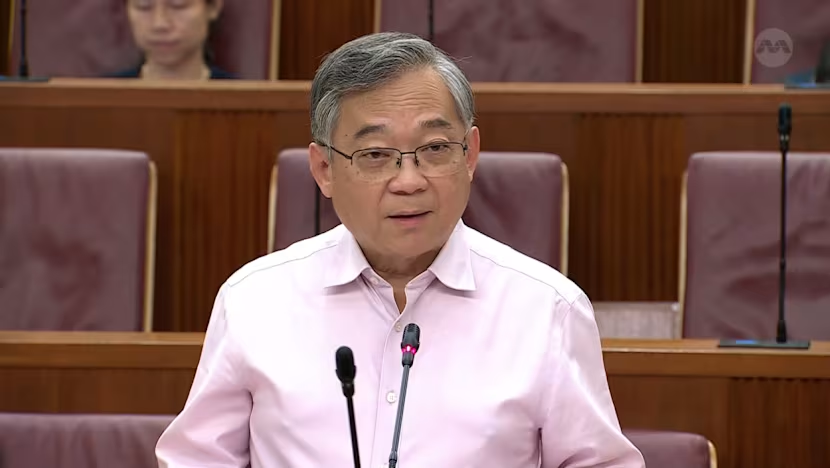

Singapore’s Deputy Prime Minister and Trade and Industry Minister, Gan Kim Yong, has confirmed that the government is closely monitoring the escalating conflict in Iran and the wider Middle East. Speaking in Parliament, Gan warned that continued tension in the region could push global energy prices higher, with potential knock-on effects on Singapore’s economy.
Global Energy Prices and Economic Risks
Gan highlighted that disruptions in energy supply routes or prolonged conflict could lead to rising fuel and commodity costs worldwide. For Singapore, a highly trade-dependent and energy-importing economy, this could increase business costs, push up consumer prices, and weigh on overall economic growth.
The Deputy Prime Minister noted that while Singapore is not directly involved in the conflict, the city-state remains vulnerable to global energy market volatility. Businesses and households may face higher operational and living costs if oil and gas prices continue to surge.
Government Preparedness
Gan emphasized that the government is prepared to reassess its gross domestic product (GDP) forecasts if the situation in the Middle East worsens. Officials are actively monitoring developments and evaluating potential economic implications to ensure that policy decisions remain responsive to global events.
The government’s proactive stance reflects Singapore’s broader strategy of maintaining economic resilience amid external shocks. By keeping a close watch on energy prices and supply disruptions, policymakers aim to anticipate challenges and mitigate risks to growth and stability.
Broader Economic Implications
Rising energy costs could affect a wide range of sectors in Singapore, from manufacturing and logistics to transport and household consumption. Companies that rely heavily on imported energy or raw materials may see margins tighten, while higher living costs could reduce consumer spending, slowing domestic demand.
Analysts note that the government’s willingness to review GDP forecasts underscores the interconnectedness of global geopolitical events and Singapore’s economic outlook. Prolonged instability in the Middle East could prompt adjustments in fiscal planning, business strategies, and inflation expectations.
Key Takeaways
- Singapore is monitoring the Iran conflict closely and assessing potential economic risks.
- Rising global energy prices could increase costs for businesses and households.
- The government may revise GDP and inflation forecasts if the situation escalates.
- Proactive planning reflects Singapore’s strategy to maintain economic resilience amid global uncertainty.

