
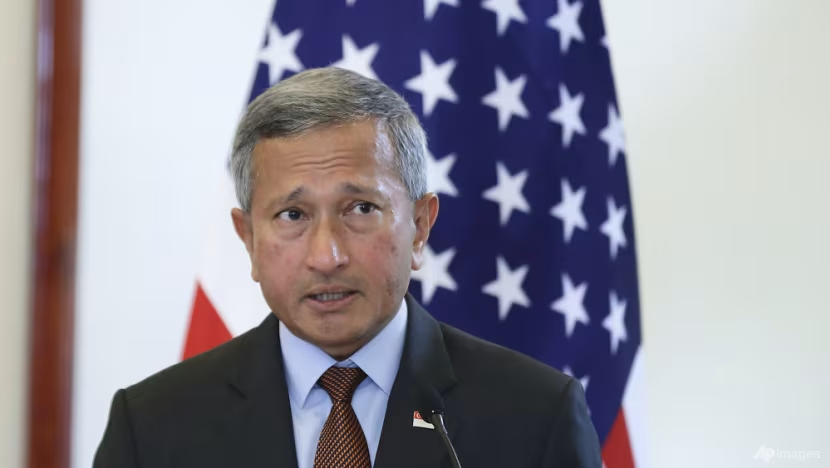
Singapore Explores ‘Worst-Case Scenario’ Plans for Harvard Students Amid Enrollment Uncertainty, Says Vivian Balakrishnan

Singapore’s Minister for Foreign Affairs, Vivian Balakrishnan, has acknowledged growing concerns over uncertainty in international student enrollment at Harvard University, stating that the government is actively exploring “worst-case scenario” solutions. With the new academic year in the U.S. typically beginning in August, Balakrishnan emphasized that no guarantees can be made yet about resolving the challenges faced by Singaporean students planning to study abroad this fall.
Growing Concerns Over International Student Enrollment
The ongoing global disruptions caused by factors such as pandemic-related travel restrictions, visa delays, and geopolitical tensions have contributed to widespread uncertainty surrounding international student enrollments in the United States. Harvard University, known for its large and diverse international student body, is no exception.
Singapore, which sends a significant number of students to top American universities every year, is now facing difficulties ensuring smooth enrollment and visa processing for its students. These issues threaten to delay or derail many students’ academic plans and raise broader questions about the future of international education amid evolving global challenges.
Vivian Balakrishnan’s Candid Assessment
In a recent statement, Minister Vivian Balakrishnan candidly addressed the challenges Singapore faces in guaranteeing that all its students bound for Harvard will be able to enroll on time. He highlighted that while the government is working closely with American institutions and authorities, the complex nature of visa and enrollment processes means outcomes remain uncertain.
Balakrishnan’s acknowledgment signals a realistic approach, preparing Singaporean families and students for possible disruptions rather than offering premature assurances. This openness has been welcomed by education stakeholders who recognize the need for clear communication during uncertain times.
What Are the ‘Worst-Case Scenario’ Solutions?
While details remain under wraps, Balakrishnan indicated that Singapore is exploring contingency plans to mitigate the impact of any enrollment delays. These “worst-case scenario” solutions could include options such as:
- Deferred Enrollment: Allowing affected students to postpone their admission to a later semester or academic year without penalty.
- Alternative Education Pathways: Facilitating access to local or regional institutions where students can continue their studies temporarily.
- Enhanced Support Services: Providing dedicated assistance for affected students, including counseling, visa support, and academic guidance.
- Online Learning Options: Collaborating with Harvard and other universities to enable students to start their courses remotely until they can physically attend.
These strategies reflect a flexible, student-centered approach to managing uncertainty and ensuring that Singaporean students continue to receive quality education despite disruptions.
Broader Implications for International Education
Singapore’s proactive stance comes amid growing global concerns about the future of international student mobility. The U.S., once a top destination for global scholars, is witnessing increased competition from other countries and challenges linked to visa policies and geopolitical shifts.
For Singapore, a country that places a high value on education and international exposure, securing opportunities for students abroad is a key priority. The current uncertainty at Harvard serves as a reminder of the fragility of international education pathways and the need for adaptive strategies.
Collaboration Between Governments and Universities
The situation highlights the importance of collaboration between governments, educational institutions, and diplomatic bodies. Singapore’s government is reportedly in ongoing discussions with Harvard University and U.S. authorities to find solutions that minimize disruption.
Such cooperation is crucial to addressing visa processing backlogs, ensuring timely communication, and exploring flexible academic arrangements. It also underscores the evolving role of governments in safeguarding students’ educational futures in a rapidly changing world.
What Singaporean Students and Families Should Know
Students and families affected by the uncertainty are encouraged to stay informed through official channels and maintain close contact with university admissions offices. Preparing for potential changes, such as delayed start dates or alternative study options, can help reduce stress and ensure a smoother transition.
Singaporean education agencies and counseling services are also stepping up to provide guidance and support during this period, recognizing the emotional and logistical challenges students face.
Looking Ahead: The Future of Student Mobility
While the challenges are significant, Singapore’s approach of planning for worst-case scenarios while seeking collaborative solutions reflects a commitment to resilience and adaptability. As the global landscape continues to evolve, flexible education pathways and strong government support will be critical to maintaining Singapore’s position as a leader in nurturing international talent.
The outcome of this situation may also influence broader policy discussions about international student mobility, visa regulations, and cross-border educational partnerships.
Vivian Balakrishnan’s recent remarks underscore the uncertainties facing Singaporean students enrolling at Harvard and the wider complexities of international education today. By openly acknowledging challenges and preparing for worst-case scenarios, Singapore is demonstrating a pragmatic and supportive approach to protect its students’ academic journeys.
As the August start date approaches, students, families, and educational stakeholders will be watching closely, hopeful that solutions emerge to ensure a smooth return to campus life for Singapore’s future Harvard scholars.

