
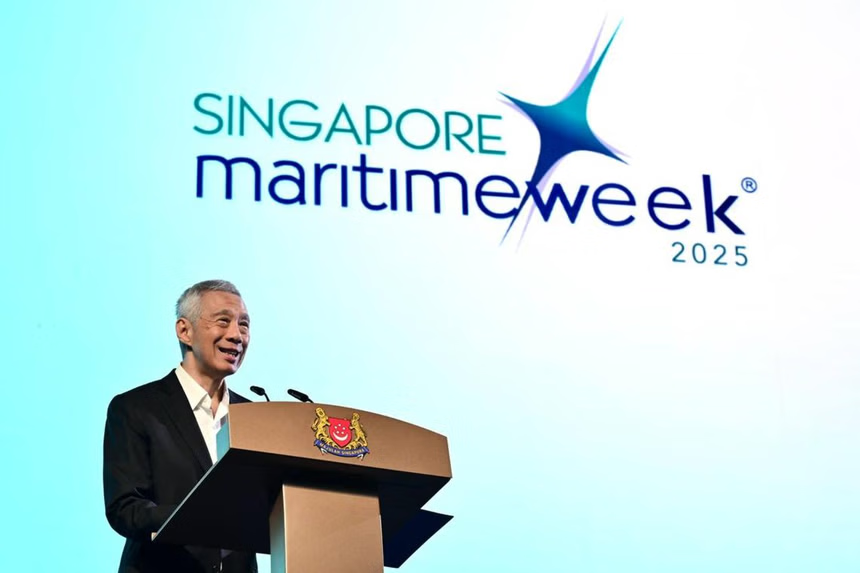
Senior Minister Lee Hsien Loong Warns of ‘Turning Point’ in Global Trade Amid Rising Tensions and Uncertainty

A New Era in Global Trade?
In a recent speech at the opening of Singapore Maritime Week, Senior Minister Lee Hsien Loong warned that the world might be approaching a critical moment in global trade. Rising strategic tensions and unpredictable policy changes—especially those from the new U.S. administration—could signal a shift in how trade evolves in the coming years.
Lee, who previously served as Singapore’s Prime Minister, suggested that the world may not be able to rely on global trade continuing at its current pace, especially in comparison to how economies are growing. If trade starts to slow down relative to economic growth, the consequences could be significant—affecting not only global economics but also political stability worldwide.
The Turning Point in Global Trade
Lee Hsien Loong emphasized that the trade-to-GDP ratio is a crucial metric to monitor. This ratio measures how much trade (imports and exports) is growing compared to the overall size of the global economy. If global trade no longer grows at the same pace as economies, it could be a sign that something deeper is at play, and the world would be entering what Lee called a “new epoch.”
Why is the Trade-to-GDP Ratio Important?
The trade-to-GDP ratio has been a reliable indicator of how interconnected global economies are. A decline in this ratio could mean less trade activity between nations, which would directly affect industries and economies that depend on exports and imports. For countries like Singapore, where trade is a vital part of the economy, such a shift could have far-reaching effects.
The ‘Next Turning Point’
Lee’s comments highlighted a potential moment in history when trade could start to shrink in importance compared to economic growth. If this happens, it would mark a dramatic change from the post-World War II era, which saw global trade rapidly expand alongside economic development. According to Lee, such a shift would mark a “turning point” that could reshape international trade and geopolitical dynamics for the first time in decades.
Rising Strategic Tensions and Policy Uncertainty
Lee pointed to two key factors driving this potential turning point in global trade: rising strategic tensions and policy uncertainty.
1. Strategic Tensions
Around the world, tensions between major powers, particularly the United States and China, have been rising. Trade disputes, technological rivalries, and differing political ideologies are creating an environment where cooperation in global trade might not be as simple as it once was.
These tensions could make countries more cautious about relying on international trade and lead to protectionist policies, which could further disrupt the flow of goods and services across borders.
2. Policy Uncertainty
The shift in political leadership in many countries, including the United States under a new administration, has introduced a level of uncertainty in global trade policies. Trade agreements, tariffs, and diplomatic relations that once seemed stable can quickly change with new policies or leadership approaches. This uncertainty could make it more difficult for businesses and governments to plan for the future, leading to slower trade growth.
Economic and Strategic Implications of a Decline in Global Trade
If the trade-to-GDP ratio begins to fall, as Lee suggests, it could lead to significant economic and strategic consequences:
1. Slower Economic Growth
Trade is a key driver of global economic growth, particularly for countries that rely on exports. If global trade slows down, many countries could face slower economic growth, especially those in Asia and Europe, where exports play a large role in their economies. Reduced trade activity could impact industries such as manufacturing, agriculture, and technology, leading to job losses and lower living standards.
2. Social and Political Instability
Beyond the economic impacts, Lee warned that a decline in global trade could have serious social and political consequences. Economic slowdowns often lead to higher unemployment rates, poverty, and inequality. These issues can trigger political unrest, leading to social instability both within countries and between nations. As countries compete for fewer resources and opportunities, tensions could rise, leading to further geopolitical challenges.
3. Shifting Global Power Dynamics
A decrease in global trade could also shift the balance of power between countries. Countries that are more self-sufficient might emerge as stronger players, while those that rely heavily on international trade could struggle. This could lead to more isolated economies and less global cooperation on issues such as climate change, technology, and security.
Singapore’s Role in the Future of Global Trade
As a small, trade-dependent nation, Singapore is acutely aware of the potential risks posed by a slowdown in global trade. Lee’s speech comes at a time when Singapore has been focusing on strengthening its position as a global hub for trade, finance, and logistics.
Adaptation and Resilience in Singapore’s Trade Strategy
Singapore’s government has long focused on building a resilient economy that can adapt to changing global dynamics. The country’s strategic location, robust infrastructure, and global connectivity make it a key player in international trade. However, the challenges Lee mentioned underscore the importance of diversifying the nation’s economy and securing its trade relationships to ensure continued growth and stability.
Strengthening Global Partnerships
Singapore’s strategy involves strengthening partnerships with other countries and regions, fostering deeper economic ties through free trade agreements, and positioning itself as a mediator in global trade discussions. Singapore’s ability to navigate the shifting landscape of international trade could make it a leader in shaping the future of global commerce.
What Lies Ahead for Global Trade?
Lee Hsien Loong’s comments serve as a reminder that the world is entering a critical period for global trade. The rise in strategic tensions and policy uncertainty, combined with shifting trade patterns, could create challenges for economies around the world.
The decline in the trade-to-GDP ratio, if it happens, would be a significant turning point, potentially altering the way nations interact with each other in terms of trade. The global economic and political landscape would have to adapt to this new reality, which could include slower growth, rising tensions, and new forms of cooperation and competition.
For Singapore, this presents both challenges and opportunities. By staying agile and continuing to build strong international relationships, Singapore can navigate these uncertain times and remain a key player in the evolving global trade ecosystem.