
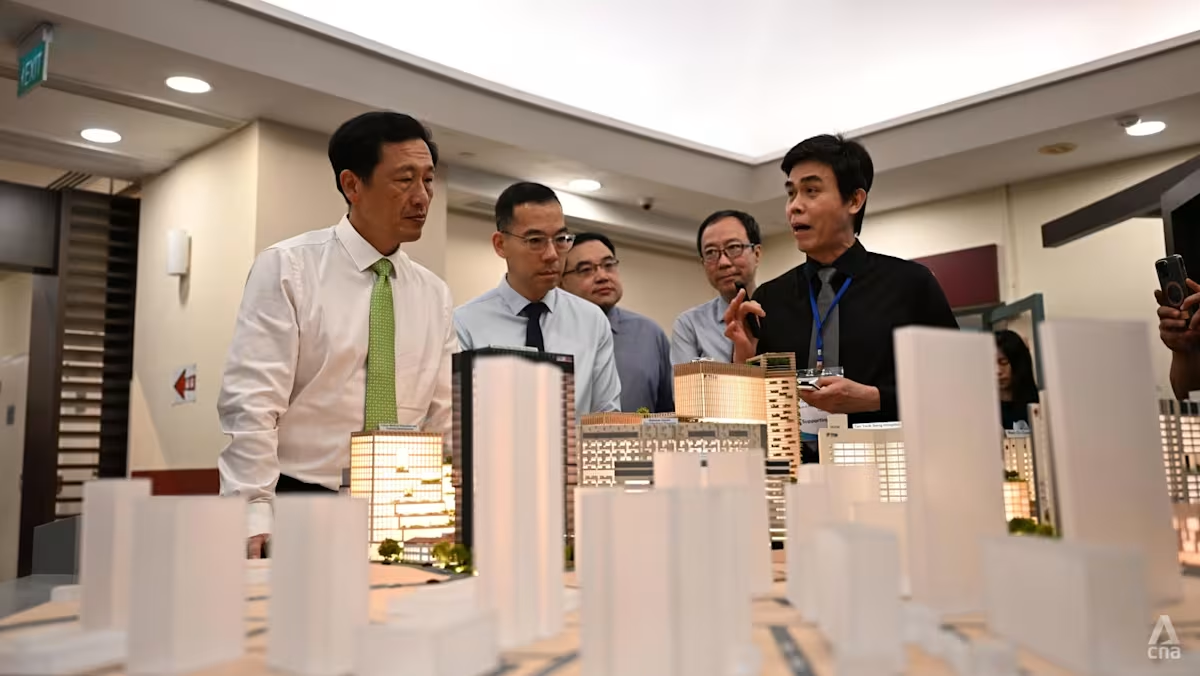
New TTSH Medical Tower to Add 600 Beds and Expand Emergency Care for Faster Treatment

Tan Tock Seng Hospital (TTSH) is set to strengthen its role as one of Singapore’s key healthcare providers with the development of a new medical tower that will provide an additional 600 acute beds and a significantly larger emergency department. The new facility will be built on the site of the former Communicable Disease Centre 2 and Annex 2 buildings and aims to meet the growing demand for acute, specialist and intensive care services.
The new medical tower forms part of a wider effort by the National Healthcare Group (NHG) Health to create a more integrated healthcare network, ensuring that patients with severe, complex or life-threatening medical conditions receive the care they need without delay. The expansion is expected to offer not only more space and resources but also better coordination between different levels of care—from primary care to tertiary treatment and community support.
Addressing Growing Healthcare Needs
Singapore’s healthcare system has been facing increasing demand in recent years, driven by an ageing population, rising chronic diseases, and a higher number of acute cases requiring specialised treatment. With these challenges in mind, the new TTSH medical tower is a critical step forward.
The 600 new beds will help ease pressure on existing hospital infrastructure, reducing wait times for critical care and improving patient outcomes. The expanded emergency department will allow for faster assessment and treatment, helping to stabilise patients more quickly and efficiently.
A hospital spokesperson explained that the new tower will provide “faster access to specialist and intensive care services for patients with severe or complex medical conditions,” enhancing the overall experience for patients and caregivers alike.
Seamless Integration Across Care Levels
One of the biggest strengths of the new development is the emphasis on integration. The hospital’s approach focuses on providing continuous care, ensuring that patients can transition smoothly from initial consultation and emergency care to specialist treatment and community-based follow-ups.
Shorter waiting times will allow patients to receive diagnosis and treatment promptly, while the integration with community healthcare providers will ensure long-term management of chronic conditions.
By connecting primary, tertiary and community care, the system aims to prevent unnecessary hospital visits and allow patients to recover in more familiar environments when possible. The hope is that by building a networked healthcare ecosystem, patients will experience a more holistic, patient-centred journey through treatment.
Enhancing Emergency Care
The expansion of the emergency department will also address one of the most critical pressure points in Singapore’s healthcare system. The emergency department currently handles thousands of cases daily, ranging from minor injuries to life-threatening medical crises.
A bigger facility means that the hospital can accommodate more patients simultaneously, reducing the time spent waiting for assessment or treatment. Improved workflows and increased staffing will further enhance the speed and quality of care provided.
For patients, especially those in critical condition, faster care can make the difference between life and death. The upgrade also allows healthcare professionals to better manage triaging and stabilisation efforts, ensuring that emergency interventions are prioritised effectively.
Benefits Beyond the Hospital Walls
The expanded medical tower will not only serve TTSH patients but will also benefit the wider healthcare ecosystem. With better facilities and improved workflows, the hospital can serve as a central hub within NHG Health’s integrated network, helping other healthcare institutions manage overflow and collaborate on patient care.
Increased capacity also means that specialist services can be more widely accessed, improving care equity for patients across different communities.
Moreover, by reducing unnecessary hospital admissions through early intervention and coordinated care, the new tower is expected to lower healthcare costs in the long run, helping to make healthcare more sustainable while ensuring that patients receive the care they need when they need it.
Looking Ahead
Construction of the new medical tower is set to begin in the near future, with full operations expected in the coming years. The project reflects Singapore’s commitment to continuously upgrading its healthcare infrastructure and adapting to emerging needs.
For patients and healthcare professionals alike, the new development is a welcome step towards more accessible, efficient, and integrated care. As hospitals face growing challenges in meeting demand, innovations like these are essential in ensuring that patients receive timely and effective treatment.
With the new tower, TTSH is poised to serve as a beacon of healthcare excellence—one that puts patient care at its core while anticipating the evolving healthcare landscape of the future.

