
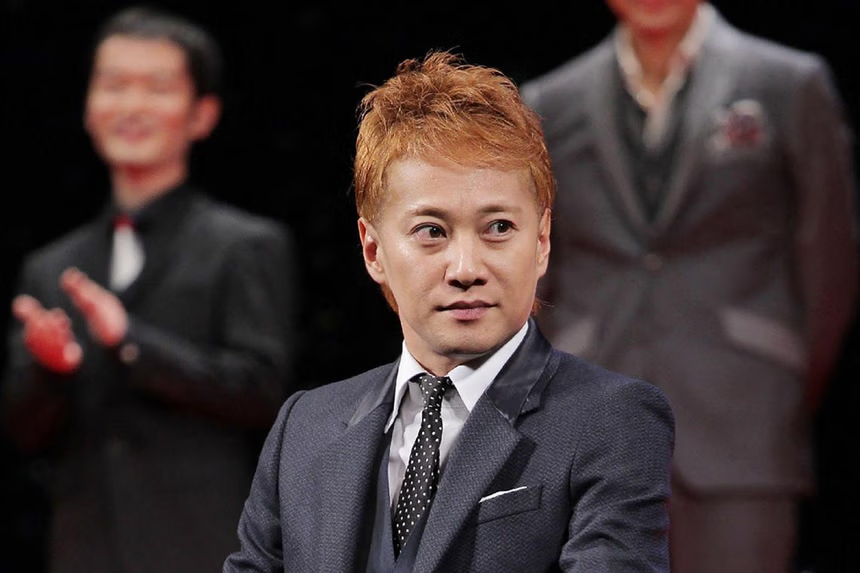
Masahiro Nakai Found Guilty of Sexual Assault: Victim Speaks Out with Relief and Frustration

A Shocking Verdict for a Former TV Star
In a case that has rocked Japan’s entertainment industry, Masahiro Nakai, the former host of Fuji Television’s popular shows and a member of the now-disbanded J-pop group SMAP, has been found guilty of sexual assault. The news broke after an independent third-party panel concluded that Nakai was responsible for the assault of a former Fuji Television employee.
The victim, who had kept silent for a long time, expressed a mixture of emotions in a statement released on April 1, 2024. She shared that she felt relief after the report confirmed her accusations but also frustration at the way her case was mishandled by the company and its executives.
The verdict is part of a broader conversation about sexual assault and harassment in Japan’s entertainment industry, shining a light on the systemic issues that allow such abuse to happen unchecked. Let’s take a deeper dive into the details of the case, the victim’s statement, and the ongoing impact of the panel’s findings.
Who is Masahiro Nakai?
Masahiro Nakai was once one of Japan’s most beloved TV personalities. As a member of SMAP, one of Japan’s most famous boy bands, he gained nationwide recognition. After the group disbanded in 2016, Nakai continued his career as a television host, appearing on a variety of shows that kept him in the public eye. His charming personality and popularity made him a household name.
However, Nakai’s star has now been tarnished by these serious allegations. The sexual assault accusations have stunned his fans and the industry, which is now grappling with the fallout from the panel’s investigation.
The Victim’s Statement: Relief and Frustration
On April 1, the victim, a former employee of Fuji Television, issued a statement through her lawyer expressing her feelings following the third-party panel’s findings. Her statement highlighted both her relief at the conclusion of the investigation and her frustration at how the situation was handled by the television network.
“My honest feeling is that I was relieved after the release of the panel report and its conclusions,” the victim said. For years, she had sought justice and was left feeling isolated and unsupported. The report finally confirmed that Nakai had indeed sexually assaulted her, a moment of validation that she had long awaited.
However, alongside her relief was frustration. The report also concluded that Fuji Television’s top executives had failed to offer adequate support during the investigation. According to the panel’s findings, the company’s leadership showed a “lack of understanding of sexual violence” and exhibited “insufficient concern for helping the victim.” These shortcomings are a critical part of the story, underscoring the broader issues of workplace harassment in the Japanese entertainment industry.
The Third-Party Panel Report: Key Findings
In its report, the independent panel concluded that the former Fuji Television employee had indeed suffered a “serious infringement of human rights” as a direct result of her job. The assault, which took place during her time at the station, was deemed to be an act of sexual violence that had a significant emotional and psychological impact on the victim.
The panel also criticized Fuji Television for its mishandling of the case, stating that executives did not take the issue seriously enough when it was first reported. The company’s failure to provide adequate support to the victim and its lack of a proper response to the situation has been seen as indicative of a broader issue within the entertainment industry—one that often prioritizes protecting its stars over supporting victims of abuse.
While the conclusion was a long-awaited victory for the victim, the findings also served as a painful reminder of the failure of systems meant to protect those who speak out against harassment.
How Did Fuji Television Respond?
Fuji Television’s response to the findings has been scrutinized heavily. The report pointed out that company executives did not fully grasp the seriousness of the situation and showed a clear lack of empathy and understanding toward the victim.
In response to the panel’s conclusions, Fuji Television issued a statement acknowledging that there were deficiencies in how they handled the case. The network promised to take the report’s findings seriously and implement measures to ensure that similar situations would not be mishandled in the future.
However, the victim’s frustration remains palpable. She had hoped for more than just a formal acknowledgment of the failings—it was the desire for real, meaningful support that she had been missing throughout the investigation. The victim has stated that the company’s lack of support made her feel as though she was the one at fault, while Nakai, despite his actions, was treated with far more leniency.
Impact on Japan’s Entertainment Industry
The Nakai case is just one of many that have raised questions about the culture of harassment in Japan’s entertainment industry. The country has long struggled with a reluctance to address sexual violence and harassment head-on, often due to the strong influence of powerful figures in the entertainment world.
This case shines a spotlight on the culture of silence and the way victims are often pressured to keep quiet for the sake of preserving the reputation of major celebrities and media corporations. The victim in this case was brave enough to come forward, but her journey was marred by resistance and mishandling from those who were supposed to protect her.
As a result, this case has sparked discussions about how Japan needs to improve its handling of sexual assault cases in the entertainment industry. It has also called attention to the need for companies to foster safer, more supportive environments for their employees, particularly women.
What Comes Next for the Victim?
While the panel’s findings have provided the victim with a sense of relief and validation, the journey ahead remains difficult. She has expressed her hopes that the findings will not only help her heal but also serve as a catalyst for change within the industry. The public nature of the case has already shone a light on the systemic issues that need to be addressed, but for the victim, the battle is still personal.
Her lawyer has made it clear that they intend to pursue further legal action against Nakai and any others who were complicit in the mishandling of her case. While the court of public opinion has already weighed in, the victim’s legal team is focused on ensuring that justice is fully served.
The case is still ongoing, and there’s hope that this public reckoning will lead to real changes in how sexual assault cases are handled in Japan.
A Turning Point for Japan’s Entertainment Industry
Masahiro Nakai’s guilty verdict has rocked Japan’s entertainment world, but it also serves as a turning point for the country’s approach to sexual assault cases. The victim’s statement, full of both relief and frustration, highlights the complexities of seeking justice in a system that has historically been more focused on protecting powerful figures than supporting victims.
This case is not just about Nakai; it’s about a larger issue within Japan’s entertainment industry that must be addressed. The victim’s bravery in speaking out, despite the obstacles she faced, will hopefully pave the way for greater accountability and a safer environment for future generations.
As for Nakai, his fall from grace is a stark reminder that even the brightest stars are not immune to the consequences of their actions. For the victim, while the road ahead remains challenging, there is hope that her fight for justice will lead to meaningful change for all victims of sexual violence.

