

Introduction
Singapore’s social fabric, long admired for its strength and unity, may be showing signs of strain. A recent study by the Institute of Policy Studies (IPS) reveals that the number of close friends Singaporeans have has decreased significantly in the past six years, a trend that could signal challenges for social cohesion in the country. According to the findings, younger people in particular are experiencing fewer close friendships than older generations, regardless of their socio-economic status.
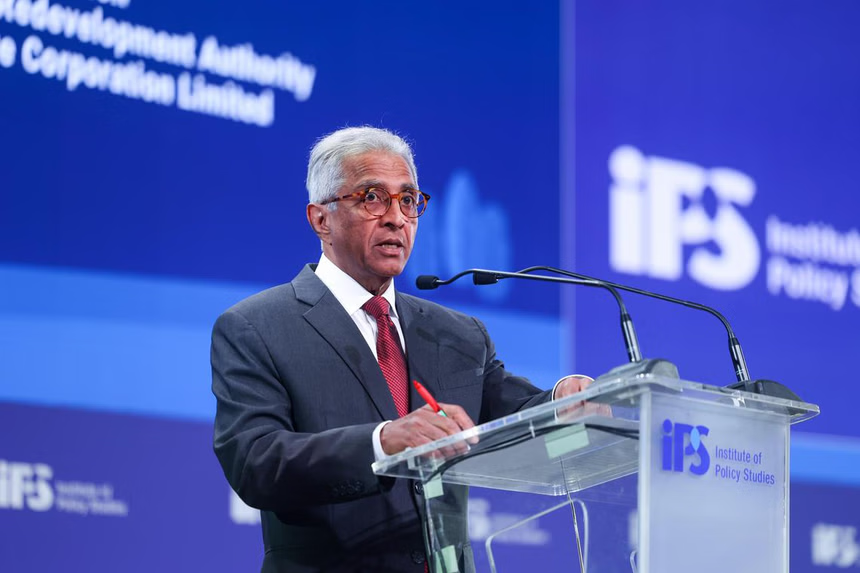
In his opening remarks at the IPS annual Singapore Perspectives conference on January 20, IPS Director Janadas Devan discussed these worrying trends and explored the factors contributing to a possible weakening of social ties. He highlighted how challenges such as income inequality, the rise of social media, and issues related to immigration are all playing a role in this shift. Despite these concerns, Devan called on Singaporeans to remember the importance of “social capital,” which, he argued, helped the country weather the Covid-19 pandemic.
Let’s dive into the details of this significant report and what it could mean for Singapore’s future.
A Shrinking Circle of Close Friends: What the Data Says
One of the most striking findings from the IPS study is the decrease in the average number of close friends that Singaporeans report having. In 2018, Singaporeans had an average of 10.67 close friends. By 2024, that number had dropped to just 6.49—almost a 40% reduction.
- Younger People Affected Most: The study shows that younger Singaporeans, particularly those aged 18 to 35, are feeling the effects of this change most sharply. These individuals report having fewer close friends compared to older generations, regardless of their socio-economic status (SES). This trend suggests that social connections among young people are weakening, which could have long-term implications for community engagement and social harmony.
- Impact of Fewer Close Friends: The decline in close friendships can have serious consequences for social cohesion. Close friendships are often the bedrock of social trust, and as these ties weaken, so too does the sense of belonging and community. This is particularly concerning in a society as diverse as Singapore, where strong bonds across different ethnic and social groups are essential for unity.
Why Is Social Cohesion Under Strain?
Janadas Devan pointed to several key factors that are contributing to this decline in social cohesion. Let’s take a closer look at each of them.
1. Income Inequality: A Growing Divide
Income inequality has become an increasingly prominent issue in Singapore. The IPS study shows that people are more likely to seek out others with similar income levels than they were just six years ago.
- Widening Gaps in Social Interaction: In 2018, only 45% of Singaporeans earning less than $2,000 a month preferred to interact with people from their own income group. By 2024, that number had increased to 52%. Similarly, those earning more than $10,000 a month showed a rise from 29% to 36% in their preference for mixing with people of similar financial standing.
- Impact of Economic Disparities: This preference for interactions within similar income groups signals a growing divide in social circles. As the gap between the rich and the poor widens, so too does the risk of creating fragmented communities where people are less likely to understand or empathize with one another’s experiences. This kind of social polarization can erode trust and weaken national unity.
2. Social Media: The Double-Edged Sword
Social media has become an integral part of modern life, but its impact on social cohesion is a double-edged sword. On one hand, social media allows people to connect with others across the globe, creating a sense of shared community. On the other hand, it can foster division and contribute to the spread of misinformation.
- Echo Chambers: Social media platforms tend to create echo chambers, where users are exposed only to views and opinions that align with their own. This can lead to increased polarization, making it harder for people to engage with those who hold differing views. As online discourse becomes more divisive, it may spill over into real-life interactions, further weakening social bonds.
- Fragmentation of Communities: Instead of bringing people together, social media can contribute to the fragmentation of communities. It may encourage individuals to group themselves into isolated clusters, based on similar interests or ideologies, rather than fostering broader connections that transcend personal differences.
3. Immigration: Tensions and Integration Challenges
Immigration is another factor that has contributed to social strain in Singapore. As the country continues to welcome immigrants, integrating these new arrivals into Singaporean society has proven to be a complex challenge.
- Cultural Differences: Immigration often introduces cultural differences that can sometimes lead to misunderstandings or tensions. When people from different cultural backgrounds struggle to integrate, it can create divisions within society. These tensions can undermine the sense of unity and social cohesion that Singapore has worked hard to build.
- Perceptions of Economic Impact: There is also concern among some Singaporeans that immigration, particularly low-wage migrant labor, may be impacting job opportunities and driving up living costs. These concerns can lead to resentment and feelings of social inequality, further weakening the bonds between different groups.
The Role of Social Capital in Strengthening Community
Despite these challenges, Janadas Devan remains optimistic about the future of Singapore’s social cohesion. He pointed to the country’s strong social capital as one of the key reasons for Singapore’s success, especially during the Covid-19 pandemic.
- The Power of Social Trust: During the pandemic, high levels of trust in the government and strong interpersonal connections allowed Singaporeans to respond quickly and effectively to health measures. According to a study published in The Lancet medical journal, countries with higher levels of social capital—characterized by both trust in government and trust among people—had better outcomes in terms of infection rates and vaccine coverage.
- Bridging Social Capital: Devan emphasized the importance of bridging social capital—the connections people have with those from different racial, religious, or socio-economic backgrounds. This kind of “bridging” ties are crucial for building a more inclusive and cohesive society, one where people understand and support each other despite their differences.
- Replenishing Social Capital: Devan also stressed that social capital is not something that can be “banked” indefinitely. Like any resource, it needs to be continuously nurtured and replenished. Singapore, he said, must actively work to strengthen its social ties through ongoing efforts in education, community building, and engagement across different groups.
Conclusion: Strengthening Social Cohesion for the Future
The IPS study and Devan’s remarks highlight that while Singapore’s social cohesion remains strong compared to other countries, there are clear signs that the nation must act now to address emerging challenges. Income inequality, the impact of social media, and issues around immigration all pose risks to the unity and stability of Singapore’s society.
However, by focusing on fostering social trust, bridging gaps between different communities, and replenishing its social capital, Singapore can continue to thrive as a harmonious and inclusive nation. The key lies in the commitment to understanding, empathy, and cooperation across all sectors of society. In doing so, Singapore will be well-equipped to face the future with unity and resilience.