
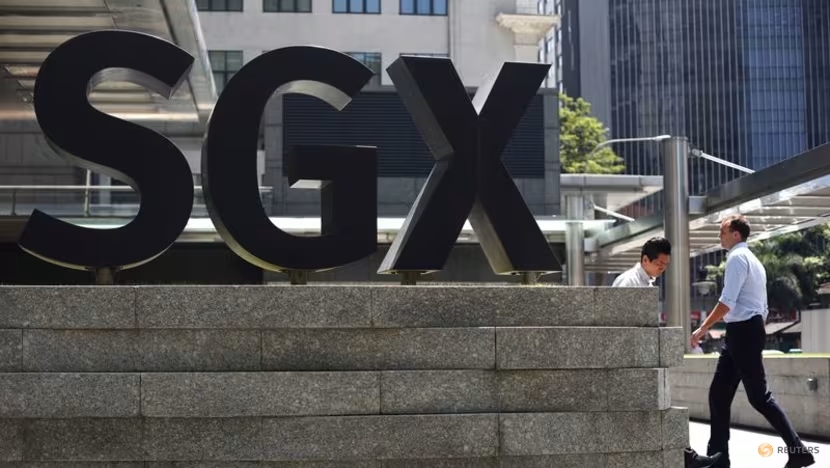

A Fresh Approach to Singapore’s Stock Market
For years, the SGX (Singapore Exchange) Watchlist has cast a long shadow over companies struggling to meet listing requirements. However, with new regulatory changes, it seems the Singaporean stock market is gearing up for a fresh start. Ven Sreenivasan, a seasoned financial journalist, weighs in on why this move could be a turning point for Singapore’s financial markets.
The SGX Watchlist, a system used to track companies that fail to meet listing rules or show poor financial health, has often been criticized for stifling market vibrancy. While it was initially introduced as a measure to safeguard investors, its enforcement often resulted in unnecessary stagnation. Now, with regulators opting for a “lighter-touch” approach, they hope to breathe new life into the market.
The Burden of the Watchlist
The SGX Watchlist served as a constant reminder to investors that the market had companies that might not be on solid footing. While it was designed to protect investors, the reality is that being placed on the Watchlist has historically led to a stunted growth trajectory for many firms. Often, companies found themselves trapped in a cycle of bureaucratic processes, making it more difficult to raise capital or grow their presence on the exchange.
For these companies, the Watchlist became a hurdle, not a help. Many businesses found it harder to regain investor confidence after being flagged, and the stigma often led to decreased trading volumes. This was a problem, especially for smaller companies looking to thrive in an already competitive environment.
A Lighter-Touch Approach: What Does It Mean?
The new regulatory approach aims to shift away from a rigid, punitive stance and instead adopt a more flexible framework. While the SGX will still monitor troubled companies, the burden of being on the Watchlist will no longer automatically signal the end of the road for them. This change is designed to give companies more room to recover, grow, and innovate without the constant pressure of falling off the radar.
By allowing companies greater flexibility, regulators hope that the stock market will see a boost in trading activity. The hope is that more companies will be motivated to list in Singapore, knowing that the regulatory environment is more adaptable and encouraging. With global markets becoming increasingly volatile, it’s crucial for Singapore to maintain a dynamic and attractive financial hub.
The Impact on Singapore’s Market
For Singapore’s stock market, the shift from a punitive to a more supportive regulatory framework is expected to foster increased participation. A more lenient Watchlist policy could help stimulate interest from both domestic and international investors, who may view this as a sign that Singapore is evolving to meet the needs of the modern business landscape.
Moreover, as more companies are given the opportunity to recover, the stock market could experience increased liquidity and a wider variety of investment opportunities. Investors will likely appreciate a market that allows companies to grow and improve, rather than penalizing them for falling short at a particular point in time.
What’s Next?
It’s clear that Singapore’s regulators are taking a new approach to keeping the market competitive and attractive. The change in how the SGX Watchlist is handled signals a shift toward a more proactive and forward-looking regulatory environment.
This move could very well serve as a blueprint for other financial markets that face similar challenges of attracting and retaining high-quality listings while ensuring investor protection. The success of this new regime will depend on how effectively it balances flexibility with investor safeguards. If done right, the Singapore Exchange could very well regain its momentum and continue to be a key player in the global financial landscape.