
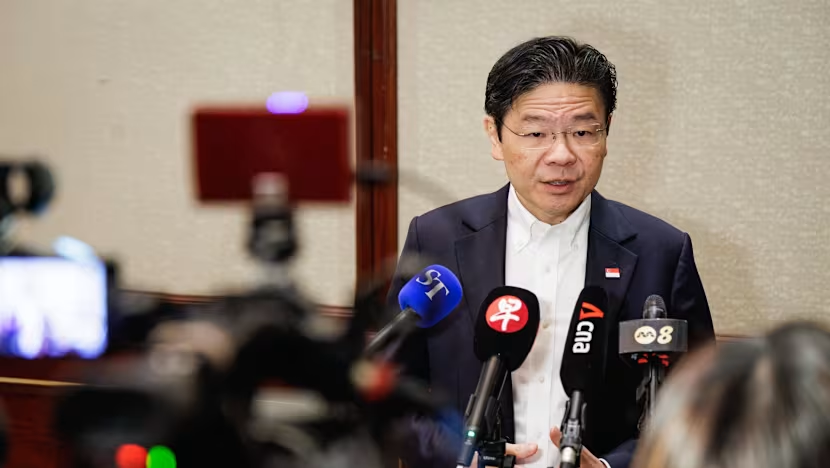
ASEAN Stays Neutral Amid US-China Rivalry, Singapore Says Region Must Remain Open

ASEAN Countries Stand Firm on Neutrality
Southeast Asian nations have agreed not to take sides in the escalating rivalry between the United States and China. Singapore’s Prime Minister Lawrence Wong emphasized that the region is committed to remaining open, inclusive, and friendly with all major powers.
Singapore’s Perspective
Prime Minister Wong highlighted Singapore’s approach:
- Maintaining strong relations with both the U.S. and China
- Supporting a neutral, non-aligned stance for ASEAN
- Ensuring that regional cooperation and trade remain unaffected by global tensions
He noted that while major powers may face challenges in their bilateral relations, Southeast Asian countries should not be forced to choose sides.
Importance of an Open and Inclusive Region
ASEAN’s position reflects the need to safeguard:
- Regional trade and investment flows
- Diplomatic stability across Southeast Asia
- Collaborative frameworks that include all major players
By avoiding alignment, the bloc aims to act as a stabilizing force amid global geopolitical pressures.
Implications for Global Politics
ASEAN’s stance may influence:
- U.S. and China strategies in the Indo-Pacific
- Regional trade agreements and economic partnerships
- Diplomatic engagement in multilateral forums
Maintaining neutrality helps ASEAN countries protect their own interests while promoting dialogue between the two superpowers.
Final Thoughts
Prime Minister Wong’s statement underscores Southeast Asia’s cautious but determined approach: fostering open, inclusive relations while navigating a tense global environment. ASEAN’s neutral position is likely to shape regional diplomacy and economic cooperation for years to come.

