
ASEAN Nations to Hold Tariff Talks with US as Anwar Calls for Unity Amid Trade Strain

ASEAN Leaders Head to Washington to Address Rising Tariffs Imposed by the US
The global trade landscape is under pressure, with Southeast Asian countries facing significant tariff hikes imposed by the United States. In response, Malaysian Prime Minister Anwar Ibrahim announced that officials from ASEAN (Association of Southeast Asian Nations) nations will be heading to Washington, D.C. for talks aimed at addressing these tariffs and seeking ways to ease the economic strain on the region.
As tensions rise in international trade, Anwar calls for cooperation and unity among ASEAN nations to navigate the challenges posed by the new global trade policies. Here’s what’s happening and why these talks are crucial for the region’s economic future.
ASEAN Faces Tough Tariffs from the US
In a move that has raised alarms across Southeast Asia, US President Donald Trump recently introduced a series of global tariffs that have particularly affected ASEAN nations. These tariffs vary depending on the trade relationship each country has with the United States, but they have all had a major impact on the region’s exports.
Malaysia, for example, is now facing a 24% tariff on its exports to the US, while Indonesia is subject to a 32% tariff. Vietnam has been hit the hardest, with a 46% tariff, making it one of the most affected nations. Singapore’s tariff stands at 10%, and the Philippines faces a 17% tariff.
These tariffs have been a blow to ASEAN economies, many of which depend heavily on trade with the United States. The sudden increase in tariffs could lead to decreased exports, making it harder for businesses to maintain their growth and stability.
Anwar Ibrahim’s Call for Cooperation
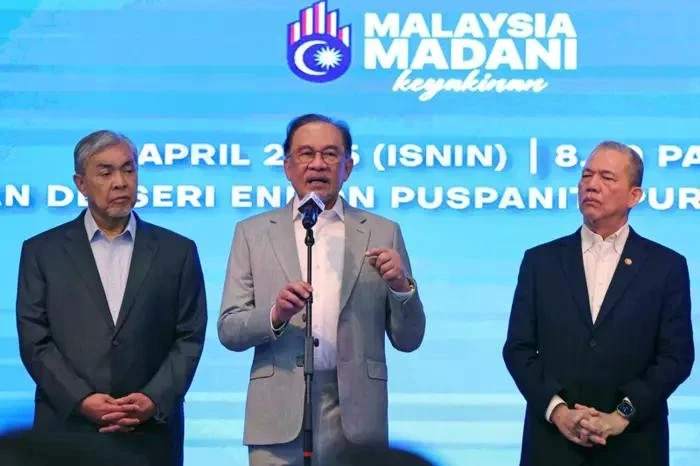
Prime Minister Anwar Ibrahim of Malaysia spoke out about the tariffs during his opening speech at the ASEAN Investment Conference 2025 in Kuala Lumpur. He acknowledged that the tariffs have put global trade systems under immense strain, more so than in recent memory. However, he also expressed hope that ASEAN nations could find a way to negotiate and adjust the implementation of these tariffs.
“There may be limited room to revisit the underlying intent of the tariffs, but there is still scope for adjusting their implementation,” Anwar said, emphasizing the importance of dialogue. His statement was a call to action, urging the ASEAN community to come together and discuss the future of their trade relationships with the United States.
Anwar’s comments reflect the reality that while the tariffs may not be completely reversed, there may be some room for renegotiation or flexibility in how they are implemented. This represents an opportunity for ASEAN nations to advocate for their interests and ensure that the new trade barriers don’t hurt their economies too much.
ASEAN Nations Prepare for Talks with the US
In the coming weeks, ASEAN officials will head to Washington for meetings with US representatives to discuss the impact of the tariffs and explore ways to address the issue. These talks are seen as a critical moment for the region to secure a fairer deal and ensure that its economic interests are protected.
While the US tariffs are a key issue on the agenda, ASEAN leaders are likely to discuss broader topics of trade and cooperation. The region is one of the world’s fastest-growing economic areas, and with the US being a major trading partner, it is crucial that both sides find common ground. The aim of these talks will be to protect the economic interests of ASEAN nations while also ensuring that trade relations with the US remain stable and mutually beneficial.
Why the ASEAN-US Tariff Dispute Matters
The trade dispute between ASEAN nations and the US is not just a matter of economics for these countries—it’s about their future growth and development. Southeast Asia has long been a hub for manufacturing and exports, with the US being one of its most important trading partners. Any disruption to this trade could result in long-term economic challenges for these nations.
For instance, Vietnam’s 46% tariff could severely impact its booming manufacturing sector, which relies heavily on exports to the US. Similarly, Malaysia, with its 24% tariff, could face higher production costs that would affect its competitiveness in global markets.
The situation is further complicated by the fact that the US tariffs are part of a broader global trade strategy under President Trump’s administration, which has seen tariffs imposed on several countries and regions. This creates uncertainty in the global trade system, which has been already struggling due to ongoing challenges like the pandemic and supply chain disruptions.
The Role of ASEAN Unity in Trade Negotiations
In his speech, Prime Minister Anwar stressed the importance of ASEAN unity. He noted that the region must present a united front when negotiating with the US. The combined economic strength of the ASEAN bloc is a powerful tool, and ASEAN leaders are hoping to leverage this strength during their discussions with the US.
The ASEAN nations—Brunei, Cambodia, Indonesia, Laos, Malaysia, Myanmar, the Philippines, Singapore, Thailand, and Vietnam—represent a significant portion of global trade. By working together and negotiating as a cohesive unit, they hope to secure a deal that benefits all member countries and reduces the negative impact of the new tariffs.
Potential Solutions: Adjusting the Tariffs or Offering Exemptions?
While it’s unlikely that the US will completely reverse the tariffs, there are several potential solutions that could ease the burden on ASEAN countries. For example, the US could consider offering exemptions or reductions for certain goods or sectors that are critical to the ASEAN economy. This could help protect key industries from the worst effects of the tariffs while still allowing the US to maintain its broader trade objectives.
Another possibility is the implementation of gradual reductions in the tariffs over time, allowing ASEAN countries to adjust their production processes and reduce the economic shock. Additionally, there may be room for further trade negotiations that could lead to more favorable terms for ASEAN nations, especially if they can demonstrate the value of their trade relationship with the US.
Looking Ahead: What’s Next for ASEAN Trade Relations?
As ASEAN nations prepare for the upcoming talks with the US, the focus will be on finding solutions that balance the interests of both sides. For ASEAN, the priority will be to protect its economies from the adverse effects of the tariffs while maintaining strong trade relations with the US.
Prime Minister Anwar Ibrahim’s call for cooperation and dialogue is a crucial step in ensuring that ASEAN nations have a voice in the global trade conversation. By working together, ASEAN can strengthen its negotiating position and secure a fairer trade deal that benefits the entire region.
The outcome of these talks will not only affect the future of ASEAN-US trade relations but will also set a precedent for how countries navigate the complexities of global tariffs and trade policies in the years to come.
The Importance of Dialogue and Unity
The trade tensions between ASEAN nations and the US are a reminder of the challenges in today’s global economy. As countries navigate new tariff policies, the ability to engage in open and constructive dialogue will be key to resolving these issues. Prime Minister Anwar Ibrahim’s call for ASEAN unity is a timely and important message, as the region looks to protect its economic interests and ensure continued growth in an increasingly uncertain global trade environment.

