
Is AI Secretly Worsening Gender Inequality? What Top Women Leaders Just Revealed Will Surprise You

When Technology Isn’t Neutral
Artificial intelligence is often seen as the future—fast, efficient, and unbiased. But what if that’s not entirely true? At a recent International Women’s Day event hosted by DBS Bank, two influential leaders shared a powerful message: AI might actually be reinforcing gender inequality instead of reducing it.
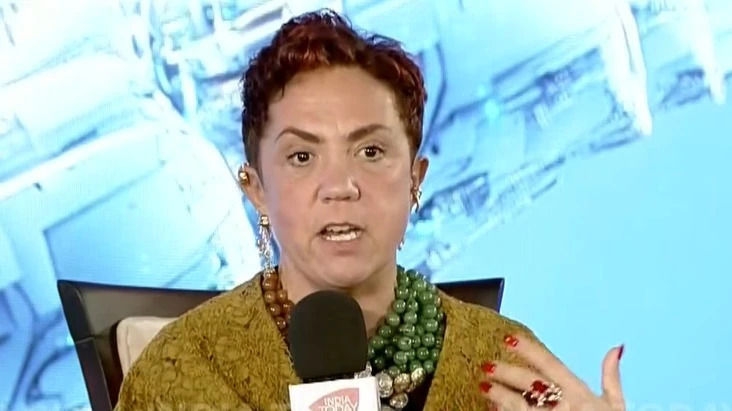
In a candid and thought-provoking discussion, DBS CEO Tan Su Shan and former Singapore president Halimah Yacob explored how emerging technologies could unintentionally deepen existing biases against women. Their conversation sheds light on an issue that is becoming increasingly urgent in today’s tech-driven world.
The Hidden Bias Inside AI Systems
AI Learns From Us—Flaws Included
Artificial intelligence systems are only as good as the data they are trained on. Most of this data comes from the internet—an enormous, unfiltered space filled with human opinions, behaviors, and unfortunately, biases.
Tan Su Shan pointed out a critical concern: if AI is trained on biased data, it will reflect and even amplify those biases. This means that if the data contains stereotypes or unequal representation, AI systems may unknowingly carry those forward.
Why This Matters More Than You Think
This isn’t just a technical issue—it has real-world consequences. AI is increasingly used in hiring, promotions, financial decisions, and even healthcare. If these systems are biased, they could:
- Favor men over women in job recruitment
- Reinforce stereotypes in leadership roles
- Limit opportunities for women in key industries
In short, AI could quietly shape a world where inequality becomes even harder to detect—and fix.
Women in Leadership: Progress Still Has Gaps
Representation Remains Uneven
Another key topic discussed during the event was the ongoing challenge of female representation in leadership positions. While progress has been made over the years, women are still underrepresented in top roles across industries.
Halimah Yacob emphasized that leadership diversity is not just about fairness—it’s about better decision-making. Organizations with diverse leadership teams tend to perform better because they bring different perspectives to the table.
The Risk of Falling Behind in the AI Era
As AI continues to reshape industries, the lack of women in leadership could make things worse. If women are not involved in designing and governing AI systems, their perspectives may be missing from critical decisions.
This creates a cycle where:
- AI systems are built without diverse input
- Biases remain unchallenged
- Inequality continues or even grows
The Internet Problem: A Biased Data Source
Why Online Data Isn’t Neutral
The internet reflects society—and society is not free from bias. From outdated stereotypes to unequal representation in content, the data available online can paint a skewed picture of reality.
Tan highlighted that AI models trained on such data may:
- Associate certain jobs with men more than women
- Reinforce traditional gender roles
- Misinterpret or undervalue women’s contributions
A Simple Example
Imagine an AI system trained on decades of online job data where most CEOs are men. The system might start to “learn” that leadership equals male, and unknowingly prioritize male candidates in hiring processes.
This isn’t intentional discrimination—it’s a byproduct of biased data.
Can AI Be Fixed? The Path Forward
Building Better, Fairer Systems
The good news is that AI bias is not unavoidable. It can be addressed—but only with conscious effort.
Experts suggest several ways to reduce bias in AI systems:
1. Diverse Data Sets
Using more balanced and inclusive data can help AI systems learn a more accurate representation of the world.
2. Inclusive Teams
Having diverse teams—including more women—involved in AI development ensures broader perspectives and better outcomes.
3. Regular Audits
AI systems should be continuously tested for bias and adjusted when issues are found.
4. Transparent Algorithms
Making AI decision-making processes more transparent can help identify and correct hidden biases.
Why This Conversation Matters Now
AI Is Growing Fast
Artificial intelligence is no longer a future concept—it’s already here, shaping everyday decisions. From social media feeds to job applications, AI influences countless aspects of life.
If gender bias becomes embedded in these systems, it could affect millions of people at scale.
A Critical Moment for Change
The discussion between Tan Su Shan and Halimah Yacob comes at a crucial time. As companies and governments invest heavily in AI, there is a unique opportunity to build systems that are fair from the start.
Ignoring the issue now could make it much harder to fix later.
The Role of Organizations and Society
Companies Must Take Responsibility
Organizations developing or using AI technology need to actively address bias. This isn’t just a technical challenge—it’s a leadership responsibility.
Companies should:
- Prioritize diversity in hiring and leadership
- Invest in ethical AI practices
- Create accountability for fair outcomes
Society Has a Role Too
Addressing AI bias isn’t just up to tech companies. Society as a whole must push for fairness and inclusivity.
This includes:
- Raising awareness about AI bias
- Encouraging education in tech for women
- Supporting policies that promote equality
Technology Should Empower, Not Divide
The conversation at the DBS International Women’s Day event highlights a powerful truth: technology is not automatically fair. It reflects the world we build—and the biases we carry.
AI has incredible potential to improve lives, but only if it is developed responsibly. Without careful attention, it could reinforce the very inequalities we are trying to eliminate.
Tan Su Shan and Halimah Yacob’s discussion serves as an important reminder that progress isn’t just about innovation—it’s about inclusion. As AI continues to evolve, ensuring gender equality must remain a priority.
Because the future of technology should work for everyone, not just a few.

