Singapore Won’t Name Country Behind UNC3886 Cyberattack — “Not in National Interest,” Says Shanmugam

Singapore Withholds Country Behind UNC3886 Cyberattack — For Now
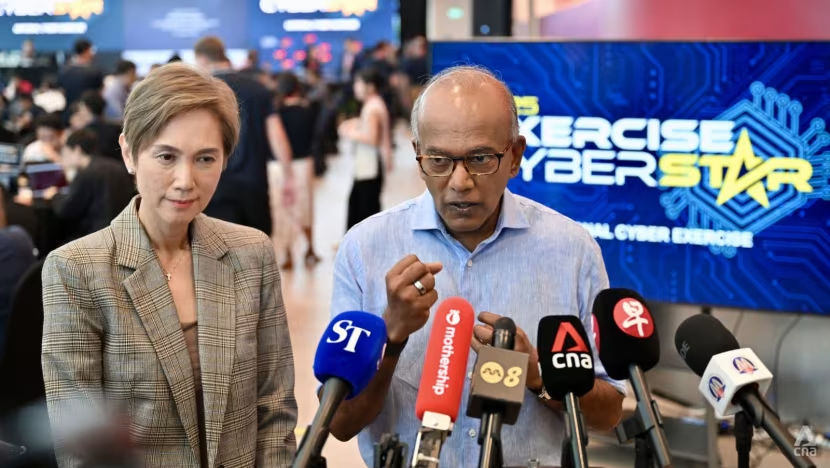
SINGAPORE — While Singapore has publicly identified UNC3886, a state-linked cyber espionage group, it has chosen not to name the country behind the attack, said Minister for Law and Home Affairs K Shanmugam on Friday.
Speaking on the government’s decision, Shanmugam explained that naming the country at this time is “not in Singapore’s best interest” due to ongoing national security considerations and the broader diplomatic context.
Singaporeans Deserve to Know About the Threat
The minister emphasized that the decision to go public with the existence and nature of UNC3886 was driven by the seriousness of the threat.
“We decided to identify the threat group because Singaporeans ought to know about it,” he said. “This is not a minor cyber incident — it’s a highly sophisticated and persistent threat.”
UNC3886 is known in global cybersecurity circles as an advanced persistent threat (APT) actor with suspected links to state-sponsored intelligence operations.
Why the Country Remains Unnamed
Shanmugam made it clear that strategic and national interests were behind the government’s decision not to attribute the attack publicly to a specific country.
“Attribution has serious diplomatic consequences. It can affect bilateral relations, trade, and national security planning. We must always act in Singapore’s long-term interest,” he said.
He added that should circumstances change, naming the country may be considered in the future.
A Serious and Ongoing Cyber Threat
Singapore’s Cyber Security Agency (CSA) had earlier revealed that UNC3886 had likely targeted critical information infrastructure and sensitive networks, and that the attackers employed custom malware and stealthy tactics to evade detection.
While no major disruptions were reported, officials stressed the importance of vigilance and upgrading cyber defenses, especially among government agencies and large enterprises.
Cybersecurity in an Increasingly Hostile Digital World
The UNC3886 case underscores Singapore’s growing role as both a regional digital hub and a potential target for state-linked cyber activity.
By choosing to focus on public awareness while holding back full attribution, the government is signaling its commitment to transparency — but also its intent to manage geopolitical risks carefully.