
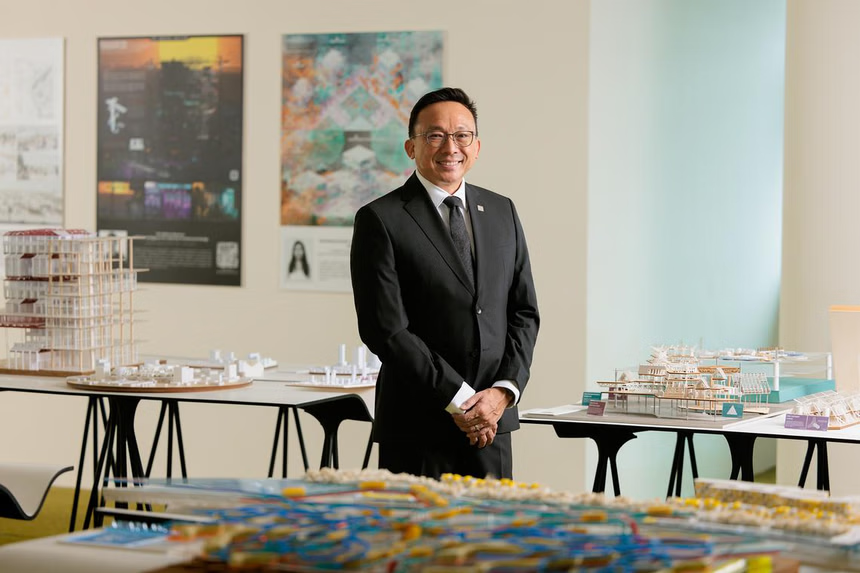
Meet the Architect Behind Singapore’s Tallest Public Housing – Now Teaching the Next Generation of Urban Visionaries

Introduction: Pinnacle@Duxton – A Landmark in Singapore’s Skyline
In the heart of Singapore stands a groundbreaking piece of architectural brilliance—Pinnacle@Duxton. Comprising seven 50-storey towers that soar to 163 meters, just shy of the Singapore Flyer, this iconic development is not only the tallest public residential complex in Singapore but also a shining example of innovative urban design.
Designed by renowned architect Khoo Peng Beng and his firm ARC Studio Architecture + Urbanism, the development broke conventional norms by offering varied and unique living spaces. The design ensures that each of the 1,848 units receives fresh air and sunlight, thanks to the clever use of sky bridges and curved towers that allow for unobstructed views. This ambitious project is now attracting attention once again, as Khoo Peng Beng takes on a new role at the Singapore University of Technology and Design (SUTD).
Pinnacle@Duxton: A Vision of Innovation
Pinnacle@Duxton is a departure from the traditional model of public housing in Singapore. Unlike typical Housing & Development Board (HDB) projects, where uniformity is often the norm, this development boasts an eclectic design. The residential units come with different facades, each tailored to offer something unique—ranging from bay windows and balconies to extended living rooms and planters. This approach creates a sense of individuality, even within the constraints of a large-scale public housing project.
Key Design Features: Emphasis on Space, Light, and Airflow
One of the standout features of Pinnacle@Duxton is its focus on maximizing natural light and airflow. The seven towers are arranged in curves, ensuring that each block is unobstructed by the others. This design maximizes space, light, and air circulation for every unit, promoting a healthier and more enjoyable living environment for residents. The inclusion of sky bridges also sets the complex apart, offering not just functional connections between the towers, but visually striking features that contribute to the skyline.
Khoo Peng Beng’s design philosophy goes beyond aesthetics, as the layout considers the well-being of the residents and their connection to the natural environment. This focus on sustainable living and innovation has earned Pinnacle@Duxton several accolades, positioning it as one of the most celebrated public housing projects in Singapore.
Khoo Peng Beng’s New Role at SUTD
Now, Khoo Peng Beng is set to take his expertise to the classroom. As part of his latest career move, he has taken on a teaching role at the Singapore University of Technology and Design (SUTD). This opportunity allows him to share his wealth of experience with the next generation of architects, urban planners, and designers.
At SUTD, Khoo aims to inspire his students to push boundaries and embrace innovation, much like he did with Pinnacle@Duxton. His focus will be on teaching architectural design, urbanism, and the integration of sustainability in modern urban developments. Through this teaching role, Khoo intends to challenge students to think differently about how cities are designed, with an emphasis on creating spaces that improve the quality of life for everyone.
Revolutionizing Urban Design
Khoo Peng Beng’s teaching role at SUTD is not just about passing on technical knowledge; it’s about encouraging students to rethink how architecture can shape the future of cities. As an architect, Khoo has always been a forward-thinker, and his approach to urbanism emphasizes adaptability and long-term sustainability.
With the success of Pinnacle@Duxton, Khoo is in a unique position to lead a new wave of thought in urban design. As Singapore continues to evolve, the integration of thoughtful architecture and sustainable development practices will play a crucial role in shaping the city’s future. Khoo’s teachings at SUTD will undoubtedly influence the way tomorrow’s architects design not only buildings but also entire communities.
Conclusion: A Legacy in the Making
Khoo Peng Beng’s involvement in both cutting-edge projects like Pinnacle@Duxton and his new role at SUTD signals a significant shift in how architectural education and urban design are viewed in Singapore. His work continues to inspire innovation, blending functionality with creativity to solve the pressing challenges faced by modern cities. As he shares his knowledge with the next generation of designers, Khoo’s legacy is sure to have a lasting impact on Singapore’s architectural landscape for years to come.